
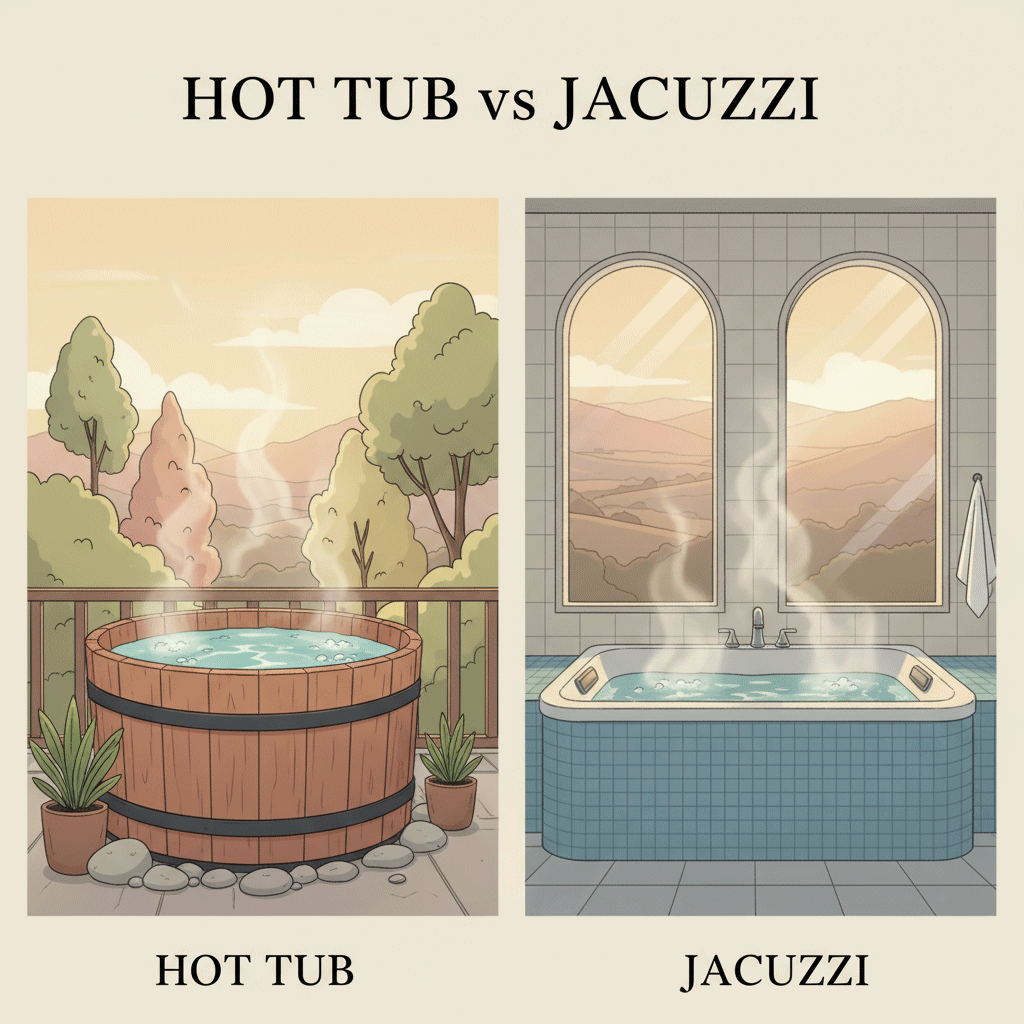

Hot tub vs jacuzzi is a common question that trips up many first time buyers and homeowners. At its core the debate is partly linguistic and partly technical: hot tub is a generic category while Jacuzzi is a brand that helped define modern hydrotherapy products. The difference matters when you move beyond name recognition to performance features and long term ownership costs.
The jacuzzi vs hot tub comparison requires a clear look at technology features, brand history, expected costs and maintenance realities. This article covers history, core technology, a side by side technical comparison, related terminology, buying factors, common misconceptions and practical recommendations so you can decide which spa fits your needs.
Table of Contents
1. What is a Hot Tub?
A hot tub is a large tub or small pool filled with heated water used for hydrotherapy relaxation or social use. Hot tubs are engineered to maintain therapeutic temperatures and provide a controlled environment for soaking and light exercise.
Soaking in warm water has roots in ancient traditions from Roman baths to Japanese onsen. The modern portable hot tub evolved in the mid 20th century with the introduction of electric pumps and synthetic shell materials that made residential ownership feasible. Over time manufacturers standardized components and added features focused on therapy and ease of maintenance.
Technical components every buyer should know
A hot tub is more than a heated container. Core components include:
- Shell material such as acrylic or rotomolded polyethylene which defines durability and finish quality.
- Heating system typically an electric heater sized to recover temperature after use and to maintain set points.
- Circulation pump or pumps that move water through jets and filtration; pump sizing affects jet performance.
- Filtration system including skimmer, filter cartridges and sometimes multi stage systems to remove particles.
- Control panel for temperature adjustment, jet control, filtration scheduling and diagnostics.
- Jet assemblies that mix air and water or direct high velocity water for massage effect.
- Insulation package and cabinet which influence energy consumption and heat retention.
Types of hot tubs
Portable or above ground models are the most common for homeowners. In ground installations integrate into landscaping and can be concrete or lined. Inflatable variants are low cost and portable but trade off durability and jet performance.
A spa protector cover can extend the life of your hot tub.
2. What is a Jacuzzi?
Jacuzzi is a trademarked brand name referring to a product family that includes jetted bathtubs, freestanding spas and portable hot tubs. In the same way people say Kleenex for tissue many say Jacuzzi when they mean any jetted tub. But Jacuzzi the company offers specific technologies that distinguish its models.
The Jacuzzi origin story and credibility
The Jacuzzi name comes from the Jacuzzi family who emigrated from Italy to the United States. The company became notable in the 1950s after a family member developed a hydrotherapy pump to help with arthritis. Over decades Jacuzzi expanded into consumer spas and invested in jet technology and water care research. That history contributes to its reputation for therapy focused products.
Jacuzzi invests in proprietary jet design and targeted hydrotherapy. Examples often cited include PowerPro jets engineered for specific muscle groups and integrated water care systems that combine filtration, UV treatment and circulation strategies. Jacuzzi models commonly emphasize ergonomic seating, targeted jet placement and curated therapy programs.
Learn what causes yellow water in hot tub systems and how to fix it.
3. Hot Tub vs Jacuzzi Technical Comparison
Below is a focused technical comparison that highlights where brand matters and where it does not.
| Feature | Hot Tub (Generic) | Jacuzzi (Brand) | Expert Insight |
|---|---|---|---|
| Definition | Generic term for jetted or heated spa | Specific brand of hot tub and hydrotherapy products | Focus on functionality not just name |
| Jet Technology | Varies widely; many use standard directional jets | Proprietary patented jets such as PowerPro designed for muscle specific therapy | Jet placement and nozzle geometry determine therapeutic effect |
| Water Care | Standard filtration and chemical approaches using chlorine or bromine | Often integrates advanced systems such as UV or ozone and proprietary filtration strategies | Advanced sanitation can reduce chemical load and maintenance frequency |
| Insulation and Efficiency | Varies with manufacturer; some cut costs on insulation | Commonly exceeds standard insulation practices and may meet efficiency programs | R value and enclosure design drive year round energy cost |
| Price Range | Entry to luxury depending on features | Generally mid to high end with premium pricing | Consider total cost of ownership not only purchase price |
| Warranty | Wide variation in coverage | Typically more consistent with comprehensive coverage | Check what parts labor and structure warranties cover |
Jet design is central to hydrotherapy. A jet that creates a coherent focused stream will affect deep muscle tissue differently than a diffused air enhanced jet that produces a gentle sensation. Water care is another technical area. UV and ozone are not substitutes for proper filtration and chemical control but they complement them by reducing organic load and microbial growth. Insulation quality measured in R value and whether the cabinet is fully insulated or partially insulated has direct impact on energy consumption. Finally warranty details such as shell structure coverage, heater and pump periods and transferability can indicate manufacturer confidence
Our comparison of 5 seater hot tub models highlights the best value options.
4. Beyond the Name Spa vs Hot Tub vs Jacuzzi
Defining the terms for clarity
Spa is an umbrella term that can refer to a facility offering hydrotherapy services or to the equipment itself. Hot tub refers to the water filled unit designed for soaking. Jacuzzi is a brand within that category. Using the terms precisely helps when researching models and service providers.
Jetted bathtub versus hot tub
A jetted bathtub is typically an indoor fixture drained and refilled after each use, used in individualized bathing. Hot tubs are designed for repeated occupancy over time without draining between uses and often for outdoor placement. Plumbing, ventilation and structural requirements differ significantly between the two.
Swim spa as a related option
A swim spa combines continuous current swimming with hot tub style seating. It is a hybrid between a pool and a spa and suits users who want exercise plus relaxation in a smaller footprint.
Wondering about average hot tub temp settings? We’ve got the numbers.
5. Key Factors in the Jacuzzi vs Hot Tub Buying Decision
5.1 Hydrotherapy focus
If your primary goal is targeted pain relief or rehabilitation choose a product with engineered jets, ergonomic seating and adjustable flow control. Jacuzzi often markets models that map jets to common trigger points while some high end generic manufacturers offer comparable therapy packages. Evaluate jet placement not jet count.
5.2 Budget and value analysis
Jacuzzi models tend to command premium pricing because of proprietary components and brand positioning. For many buyers the question is whether proprietary technology yields measurable benefits for their use case. Consider total cost of ownership including energy use, service parts costs and expected lifespan. A mid priced hot tub that is well insulated and has a reliable pump can outperform a poorly insulated premium unit in annual operating cost.
5.3 Maintenance and longevity
Proprietary water care systems can simplify maintenance but may require branded replacement parts. Generic hot tubs may use industry standard components that are widely available and often less expensive. Inspect filter access, circulation patterns and the manufacturer support network. Proper winterization and routine chemical balance are more important to lifespan than brand alone.
5.4 Customization and available features
The market for generic hot tubs is broad offering many configurations and price points. If you want a highly bespoke layout, lighting choreography, expandable control systems or unusual shell shapes you may find more options among independent manufacturers. If you want a curated therapy experience with matched components select a brand that validates performance through testing.
The benefits of a heated spa bed go beyond comfort they support muscle recovery too.
6. Common Misconceptions and FAQs
Is every hot tub a Jacuzzi
No. Jacuzzi is a brand name. Many hot tubs are made by other manufacturers and may offer similar or different performance characteristics.
Which is better for arthritis or muscle pain
Jet power and placement matter most. A Jacuzzi with targeted therapy jets can be effective but some high end generic models match or exceed therapy performance. Consult product specifications and a licensed therapist for a clinical recommendation.
Do Jacuzzis require special chemicals
Proprietary water care systems may reduce chemical needs but you still need routine testing and sanitizer such as chlorine or bromine unless the model specifies an alternative approved sanitation method.
Can I use a Jacuzzi indoors
Yes but indoor installation requires adequate ventilation, a properly reinforced floor and attention to humidity control to avoid structural damage.
What is the average lifespan of a hot tub versus a Jacuzzi
Lifespan depends on materials maintenance and usage. A well maintained acrylic shell with regular service can last 15 years or more. Warranty and build quality are better indicators than name alone.
Summary of core distinction
The hot tub vs jacuzzi choice is at once a question of brand recognition and of technical priorities. A Jacuzzi typically promises engineered jets and integrated water care with premium fit and finish. A generic hot tub can offer a broader range of budgets and custom configurations and in many cases equally strong performance.
Final recommendation
Decide first on therapy goals energy budget maintenance preferences and desired lifespan. If you prioritize targeted hydrotherapy, brand backed warranty and a cohesive feature set a Jacuzzi model is worth evaluating. If you prioritize customization variety and lower initial cost explore reputable generic manufacturers with strong support networks. In either case test seating ergonomics inspect jet placement and review warranty details before purchase.