
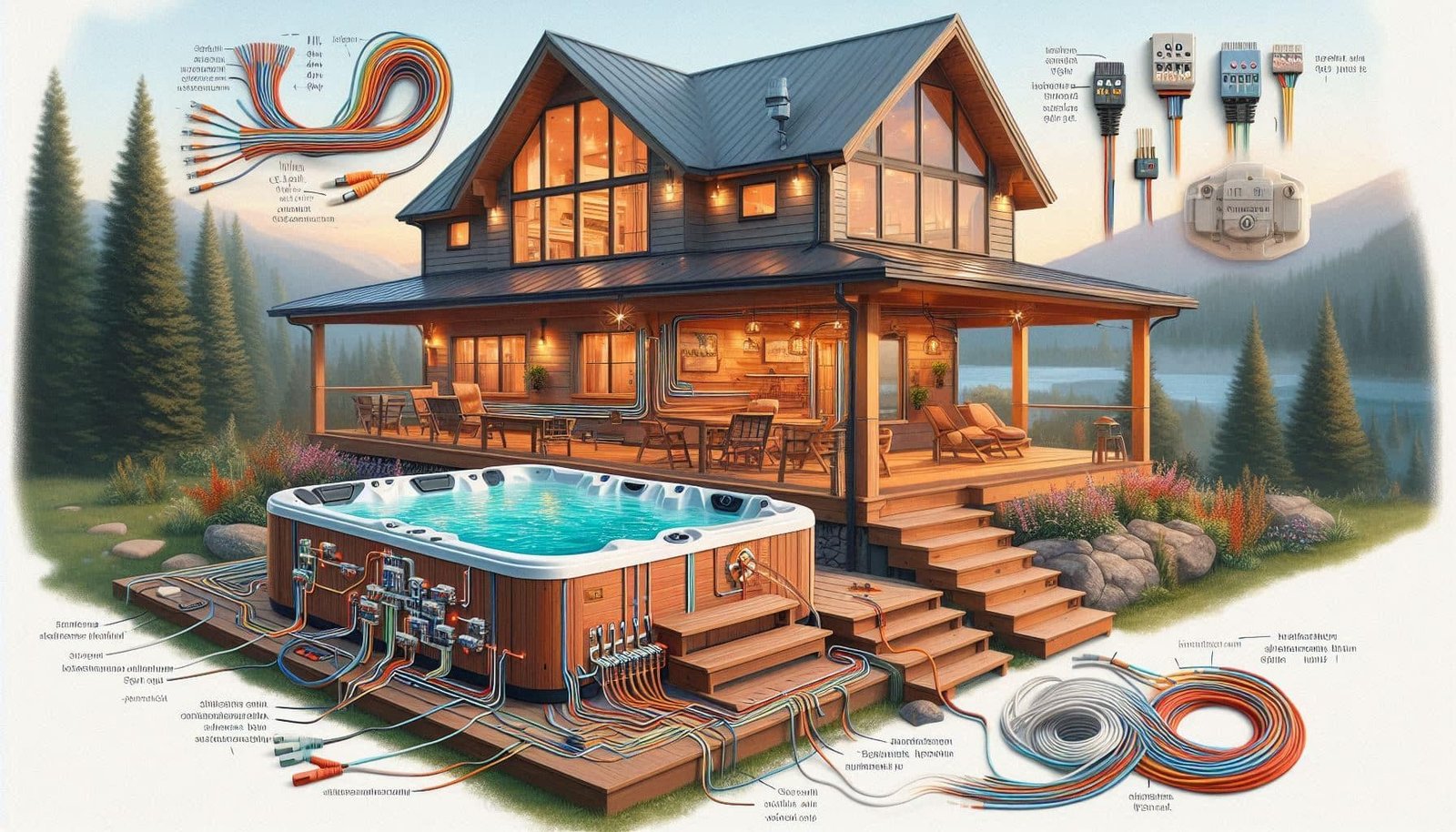

Installing a 40 amp hot tub is one of the most rewarding upgrades you can make to your home. But unlike simply plugging in a 120V spa, a 40A model requires careful electrical planning, the right wire size, and a solid understanding of code compliance. If done incorrectly, the result can be expensive repairs or even a safety hazard.
In this comprehensive guide, we’ll cover everything you need to know about wiring a 40 amp hot tub, from understanding how much power it really draws to selecting the right wire gauge, breaker, and disconnect setup. As someone who’s wired dozens of hot tubs safely and efficiently, I’ll walk you through each step with the same precision used on real installations.
Table of Contents
Understanding the Power Behind Your 40 Amp Hot Tub
A 40 amp hot tub isn’t just a luxurious backyard feature — it’s a serious electrical load that requires dedicated wiring, a GFCI-protected breaker, and the correct conductor size. Understanding why it needs this much current helps you see why professional installation and compliance matter.
You might also be curious about: flexible 0 hot tub financing options for every budget.
The Difference Between 40A and Other Common Amperages (50A, 60A)
Most residential hot tubs operate on either 40, 50, or 60 amps. The difference lies in how many pumps, blowers, and heaters can run simultaneously.
A 40A hot tub usually runs a single heater and one or two jet pumps. This setup balances comfort with efficiency but limits the number of components that can operate at the same time. In contrast, a 50A or 60A spa allows multiple jet pumps and the heater to run concurrently — ideal for larger tubs or dual-zone swim spas.
This amperage difference translates to wire thickness, breaker rating, and overall installation complexity. For example, while a 60A system often requires a 6 or 4 AWG wire, a 40A model typically works perfectly with 6 AWG copper conductors under 70 feet.
Here’s another topic that could help you: how to add hot tub to existing pool designs with minimal disruption.
Key Components That Draw 40 Amps (Heater, Pumps, Blower)
Your spa’s amperage rating represents the maximum current drawn when all primary components operate simultaneously.
- Heater (4-5.5 kW): The single largest consumer of electricity in any hot tub, pulling up to 23 amps on its own.
- Jet pumps: Usually draw between 8-12 amps each, depending on motor efficiency.
- Blower or circulation pump: Smaller components that add 3-5 amps combined.
Together, these components easily approach 38-40 amps, which is why this dedicated circuit is essential. Underrating the system or using an incorrect breaker can cause nuisance tripping or overheating — both of which pose real risks.
Essential Safety and Code Requirements for Wiring a Hot Tub
When wiring a 40 amp hot tub, electrical safety isn’t optional — it’s the foundation of every proper installation. U.S. installations are governed by the National Electrical Code (NEC) and local building regulations, which outline how hot tubs must be grounded, protected, and safely disconnected.
Wondering which is better: hot tub vs jacuzzi? We break it down.
The Role of the GFCI Breaker and Disconnect Switch
Every modern spa requires a GFCI (Ground Fault Circuit Interrupter) breaker. This device instantly shuts off power if it detects even a small current leak (as little as 4-6 milliamps) that could otherwise cause shock or electrocution.
The GFCI is typically installed in the home’s main panel or in a spa panel mounted near the tub. According to NEC standards, a disconnect switch must also be placed within 5 to 50 feet of the spa for emergency shutoff. This ensures the system can be safely de-energized before servicing or during emergencies.
Understanding NEC (National Electrical Code) Compliance
The NEC sets strict rules for outdoor spa installations. Some of the key requirements include:
- Dedicated circuit: The spa must have its own 240V, 40A circuit with no shared loads.
- Proper wire protection: Outdoor wiring must be enclosed in PVC or metal conduit rated for moisture exposure.
- Grounding and bonding: All metallic parts within 5 feet of the tub (railings, fittings) must be bonded to prevent potential differences.
- Weatherproof disconnect and GFCI enclosure: All electrical components must be rated for outdoor conditions (NEMA 3R or better).
Always check the most recent NEC edition (2023) and your local electrical authority for permit and inspection requirements before beginning work.
This guide explains why a spa protector is essential for outdoor setups.
Permits and Professional Installation: When to Call an Electrician
While it’s possible for experienced homeowners to perform a 40A spa installation, most jurisdictions require an electrical permit and inspection. If you’re not fully confident in interpreting wiring diagrams or code sections, it’s best to hire a licensed electrician. They’ll ensure compliance, proper grounding, and correct GFCI functionality — saving you from costly code violations later.
Selecting the Correct Wire for 40 Amp Hot Tub Installation
One of the most common questions I hear is: “What size wire do I need for my 40 amp hot tub?” Choosing the right conductor is critical to both performance and safety. Undersized wire can overheat, while oversized wire wastes money and complicates connections.
The Definitive Answer: What Size Wire for a 40 Amp Hot Tub?
In most cases, the correct wire size for a 40 amp circuit is 6 AWG copper. This gauge provides sufficient current-carrying capacity while maintaining minimal voltage drop under typical residential distances (under 70 feet).
Here’s why:
- The NEC recommends a circuit be loaded to no more than 80% of its rating for continuous loads.
- For 40 amps × 80%, your continuous load capacity should be about 32 amps — well within the safe range for 6 AWG copper.
- Aluminum wire, while cheaper, carries current less efficiently and should be upsized to 4 AWG if used.
Voltage Drop Calculation: When You Need a Larger Wire (4 AWG)
If your spa panel is located far from the main breaker, voltage drop becomes a concern. The longer the run, the more electrical resistance and performance loss you’ll experience.
Here’s a quick comparison table of recommended wire sizes versus distance for a 40A hot tub load:
| Distance (Feet) | Recommended Wire (Copper) | Estimated Voltage Drop |
|---|---|---|
| 50 ft | 6 AWG | ~2% |
| 75 ft | 6 AWG | ~3% |
| 100 ft | 4 AWG | ~2% |
Anything over 75 feet generally justifies stepping up to 4 AWG copper to keep your voltage drop under 3%, preserving full heater performance and avoiding breaker trips.
Choosing the Right Cable Type (THHN vs NM-B)
Indoor wiring often uses NM-B (Romex) cable, but this type is not suitable for outdoor or buried installations. For a hot tub, you should use:
- THHN/THWN wires inside PVC conduit for outdoor runs.
- UF-B cable only if direct burial is allowed by local code (less common).
THHN conductors inside conduit offer the most flexibility and longevity, ensuring resistance to moisture, UV exposure, and temperature fluctuations.
Prevent yellow water in hot tub setups with regular maintenance routines.
Step-by-Step Guide to Wiring Your 40 Amp Hot Tub
Once you’ve selected the right materials, it’s time to wire the spa safely. Below is a simplified version of the same process I follow during professional installations. Always shut off power at the main breaker before handling any wiring.
Preparing the Conduit and Trenching (If Applicable)
Outdoor hot tubs typically require conduit protection for all buried or exposed wire. PVC Schedule 40 conduit is ideal for underground use, while EMT metal conduit can be used for surface mounting.
If trenching is needed, follow local depth requirements — usually 18-24 inches for buried conduit. Lay a warning tape a few inches above the conduit to alert anyone digging in the future.
Connecting the Wires to the Disconnect and GFCI Breaker
Here’s how to safely make your electrical connections step by step:
- Turn off all power at the main breaker panel.
- Route the conduit and pull the wires (two hot, one neutral if needed, and one ground).
- Strip about 3/4 inch of insulation from each wire end.
- Connect the two hot wires to the GFCI breaker’s load terminals.
- Attach the neutral (if required by the spa) and ground wires to their respective bars.
- Mount the disconnect switch between the breaker and the spa, following the 5-50 ft NEC rule.
- Tighten all connections and inspect for secure terminations.
- Close all enclosures and restore power for testing.
A properly wired GFCI breaker should trip immediately when tested, confirming it’s ready to protect your spa circuit.
Final Connection to the Hot Tub Control Panel
Finally, connect the conduit from the disconnect to the spa’s control box. Follow the manufacturer’s wiring diagram carefully — every spa model may have slightly different terminal labeling. Verify that:
- Hot leads are connected to L1 and L2.
- Ground wire is secured to the grounding lug.
- All strain relief fittings are tight to prevent moisture entry.
Perform a full functionality test once power is restored and confirm the heater, pumps, and controls operate smoothly.
A 40 amp hot tub offers the perfect balance of power and efficiency for most homeowners, but only when installed correctly. By following NEC safety rules, using the proper wire size, and ensuring GFCI protection, you can enjoy years of safe, reliable spa performance.
Remember, electricity and water never mix – so when in doubt, always consult or hire a licensed electrician to inspect your setup before the first soak.
Frequently Asked Questions
Can I use a subpanel for my 40 amp hot tub?
Yes. Installing a subpanel near your spa is often recommended for easier breaker access and shorter wire runs. It must still include a 40A GFCI breaker and comply with NEC spacing rules.
How far does the disconnect switch need to be from the hot tub?
The NEC specifies that a disconnect must be at least 5 feet away (to prevent users from reaching it while in water) and no more than 50 feet away (for easy access during emergencies).
What happens if I use a wire size that is too small?
Undersized wire can overheat, cause voltage drop, trip breakers, and eventually lead to fire hazards. Always size your wire according to amperage and distance.
Can I run Romex cable outdoors for my spa?
No. NM-B (Romex) cable isn’t rated for wet or outdoor conditions. Use THHN conductors inside a PVC conduit instead.
Should I turn off my hot tub after each use?
No need, modern spas are designed to maintain temperature efficiently. Just ensure your GFCI protection and breaker are functioning properly.