

Setting the correct hot tub temperature is one of the single most important decisions a spa owner makes. The right temperature maximizes relaxation and therapeutic benefit while minimizing health risks such as overheating and dehydration. Because the typical hot tub temperature range for adults is relatively narrow, small differences matter: a few degrees can change the experience from restorative to risky.
This guide explains how the average hot tub temp varies by user (healthy adults, children, pregnant women, seniors), season (summer versus winter), and activity (relaxation, post-workout recovery, hydrotherapy). Throughout, you’ll find clear, technically grounded recommendations for the ideal hot tub temperature, safe soaking durations, energy-efficient practices, and quick temperature-management tactics you can use today.
Table of Contents
1. The Maximum Safe Hot Tub Temperature: Safety First
1.1. The 104°F (40°C) Rule
An absolute upper safety limit accepted across the spa and safety communities is 104°F (40°C). This is the upper bound for healthy adults and should never be exceeded. At this temperature the body is pushed close to thermoregulatory stress; prolonged exposure increases the risk of adverse events. Always consider 104°F the ceiling, not a target.
1.2. The Danger of Overheating
Temperatures above the safe range increase the likelihood of heat-related symptoms – lightheadedness, nausea, rapid heartbeat, fainting, and in extreme cases heatstroke. Hot water causes peripheral vasodilation (blood vessels widen), which can drop blood pressure and decrease cerebral blood flow, producing dizziness and syncope in susceptible individuals. People who drink alcohol, take vasodilating medications, have cardiovascular disease, or possess impaired thermoregulatory function are at higher risk even at lower temperatures.
1.3. Recommended Soaking Duration
At the upper end of the safe range (100°F-104°F), soaking times should be limited: 15-20 minutes is a common practical recommendation for adults. For milder temps (around 98°F-100°F), longer sessions (20-30 minutes) are tolerable for healthy users. Always exit the spa if you feel dizzy, nauseous, or unusually warm, and rehydrate immediately.
Discover the best sealants for repairing a hot tub leak quickly.
2. What is the Ideal Hot Tub Temperature for Different Users?
2.1. Healthy Adults
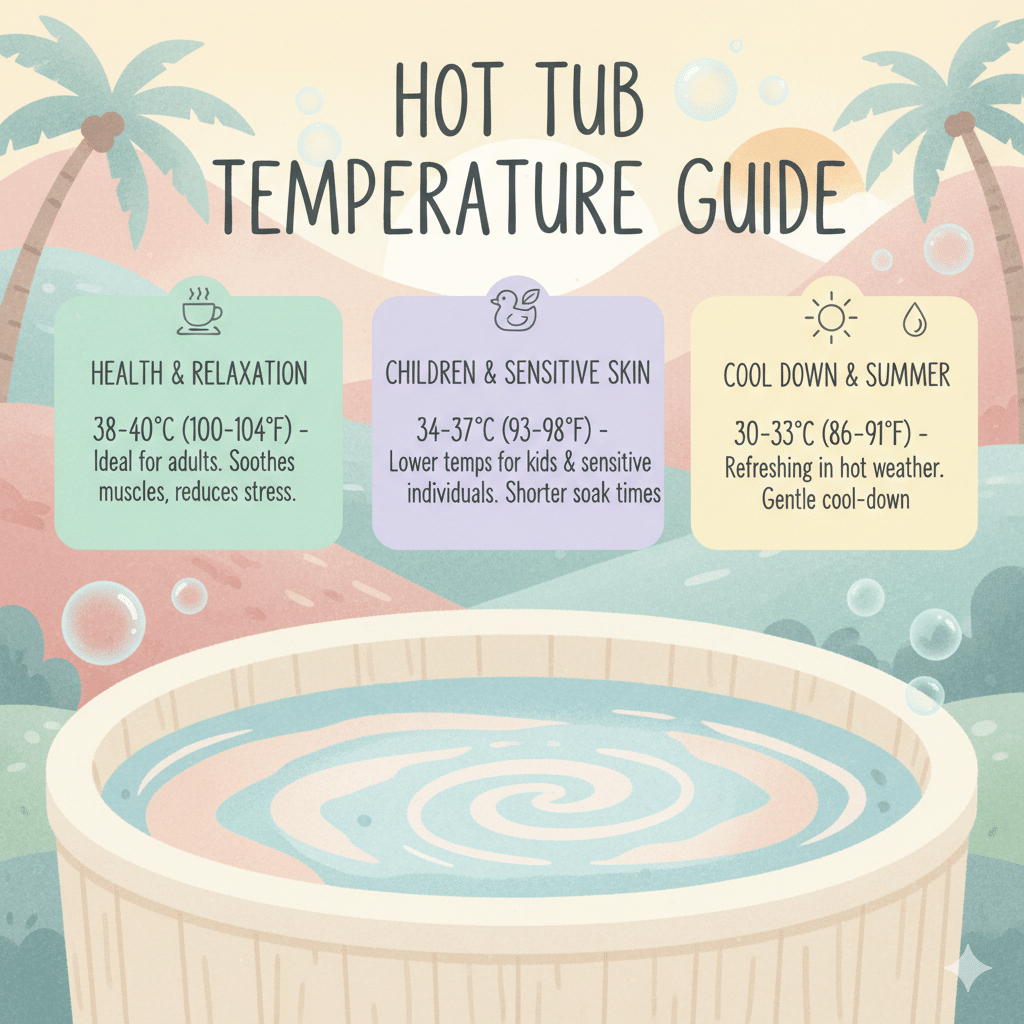
For most healthy adults the average hot tub temperature for comfortable soaking is 100°F-102°F (37.5°C-39°C). This range balances comfort and safety while delivering the typical relaxation and mild therapeutic effects people expect from a home spa. Start at the lower end and adjust in 1°F increments to find your personal sweet spot.
2.2. Children and Young Users
Children regulate heat less effectively than adults and gain core temperature faster. For supervised children, recommended hot tub temps are lower: 95°F-98°F (35°C-36.7°C). Soak times should be short (10-15 minutes), and constant adult supervision is mandatory. Children under school age should generally avoid hot tubs unless a physician approves supervised exposure.
2.3. Pregnant Women
Pregnancy presents special thermoregulatory considerations because maternal core temperature influences fetal development. Pregnant users should consult a healthcare provider before using a hot tub. A conservative guidance is to keep water at or below 100°F (37.8°C) and avoid long soaks; preventing a maternal core temperature above 102.2°F is the primary safeguard. If in doubt, opt for cooler temps or shorten session length.
2.4. Seniors and Individuals with Health Conditions
Seniors and anyone with cardiovascular, circulatory, or autonomic nervous system conditions should consult a physician before hot tub use. A prudent starting point is 98°F (36.7°C) with short sessions while monitoring heart rate and perceived exertion. Some medications (e.g., beta-blockers, antihypertensives) alter responses to heat; medical guidance is essential.
This guide explores the ideal temperature settings for a children hot tub.
3. Setting the Ideal Hot Tub Temperature for Specific Activities
3.1. General Relaxation and Socializing
For relaxed, social soaking where you may linger, the comfortable “sweet spot” is 98°F-100°F (37°C-38°C). This range is pleasant for extended conversation and mild relaxation without the physiological stress that higher temps create.
3.2. Post-Workout Recovery and Muscle Soreness
After strenuous exercise, slightly elevated temperatures help increase local blood flow and reduce muscle stiffness. For recovery sessions, aim for 100°F-102°F (38°C-39°C). Keep sessions focused (15-20 minutes) and combine with cooling and rehydration afterward.
3.3. Hydrotherapy and Pain Relief (Arthritis, Chronic Pain)
When therapeutic warmth is used to treat joint stiffness or chronic pain, begin at 100°F (38°C) and progress cautiously toward the upper therapeutic range (up to 104°F/40°C) only for short durations. Always coordinate therapeutic-temperature plans with a healthcare provider, especially for chronic conditions or where circulation and sensation are compromised.
3.4. Contrast Hydrotherapy (Advanced Topic)
Contrast hydrotherapy – alternating between hot and cold exposures – is used by athletes to stimulate circulation and reduce inflammation. Typical protocols pair short hot soaks (e.g., 3-10 minutes in the hot tub) with brief cold plunges or showers. This technique is advanced: start conservatively and consult a practitioner if you have cardiac or vascular concerns.
Thinking of upgrading? An automatic spa might be the smart choice.
4. Seasonal Adjustments and Energy Efficiency
4.1. Summer Hot Tub Temperature
In hot weather, a slightly lower hot tub temp improves comfort. Recommendations include 96°F-98°F (35.5°C-36.7°C) for a pleasant warm soak, or 85°F-90°F if you want a cooling, refreshment-style experience. Lower temps reduce heat stress and chemical demand.
4.2. Winter Hot Tub Temperature
Cold air increases perceived chill and heat loss; many owners prefer 100°F-102°F (37.8°C-39°C) in winter to maintain a comfortable balance between warmth and energy use. Whatever the season, do not exceed 104°F (40°C). Use an insulated cover to limit heat loss and prevent frequent reheating cycles.
4.3. Energy-Efficient Temperature Management
Title: Energy-Saving Hot Tub Temp: 95°F (35°C)
Keeping your spa at 95°F (35°C) while away or during extended periods of non-use preserves heat without excessive energy use and allows for a relatively quick reheating to typical soak temps.
Key Factors Affecting Cost:
- Insulation and cover quality
- Ambient temperature and location (wind exposure)
- Heating system efficiency and controls (timer/thermostat)
- Operational strategy (holding temp vs. frequent reheating)
Insulating the shell and plumbing, installing a high-quality cover, and using programmable controls to lower setpoints during non-use are among the most cost-effective ways to decrease energy bills.
5. Practical Guide to Hot Tub Temperature Management
5.1. Initial Startup Time
A newly filled spa typically requires 18-24 hours to reach 100°F, depending on heater capacity and ambient conditions. High-capacity heaters and favorable weather shorten this time; expect longer heat-up times in cold climates.
5.2. How to Adjust Your Hot Tub Temperature
Use the spa’s digital control panel or app (if equipped) to adjust the setpoint in small increments – most spas allow 1°F steps. Best practice for new users: start at 98°F, test comfort for 10 minutes, and increase slowly until you reach your ideal. Document your preferred settings so multiple household users can replicate them.
5.3. Quick Cooling Methods
- Open the spa cover for 15-30 minutes to let heat escape.
- Add small amounts of cold water if safe and practical (watch chemical balance).
- Use a dedicated cooling solution (e.g., a recirculating chiller or portable CoolZone-type device) for controlled cooling.
These quick-cooling options are useful when a spa has been set too high or when preparing the tub for infants, pregnant users, or medical considerations.
5.4. Temperature and Water Quality
Higher water temperatures increase sanitizer consumption and can accelerate microbial growth if chemical balances are neglected. Maintain an active sanitation routine, test water frequently in warm months, and follow manufacturer guidance for sanitizer levels at higher temps. Remember: temperature management and water chemistry go hand in hand for safe spa operation.
Discover what a swim spa includes and how it differs from hot tubs.
6. Summary (Ideal Hot Tub Temperature at a Glance)
| User/Activity | Recommended Hot Tub Temperature | Max Duration | Key Safety Note |
|---|---|---|---|
| Healthy Adults (General) | 100°F – 102°F (37.8°C – 39°C) | 20-30 minutes | Never exceed 104°F (40°C). |
| Post-Workout/Therapy | 100°F – 104°F (37.8°C – 40°C) | 15-20 minutes | Stay hydrated; exit if dizzy. |
| Children (Supervised) | 95°F – 98°F (35°C – 36.7°C) | 10-15 minutes | Adult supervision required. |
| Pregnant Women | Max 100°F (37.8°C) | Consult physician | Do not allow core temps >102.2°F. |
| Energy Saving/Away | 95°F (35°C) | N/A | Use a high-quality, well-sealed cover. |
Learn why every luxury spa features a premium spa bed in their treatment rooms.
The safest operating principle for any hot tub owner is simple: respect the 104°F (40°C) ceiling, tailor temperatures to the user and activity, and manage heating intelligently for energy and water-quality reasons. The ideal hot tub temperature is a function of safety, comfort, and purpose – find your personal range within recommended bounds and document it. Small adjustments (1-2°F) can dramatically improve comfort while reducing risk and energy consumption. Enjoy your spa responsibly, hydrate regularly, and consult a physician when health conditions or pregnancy are involved.