
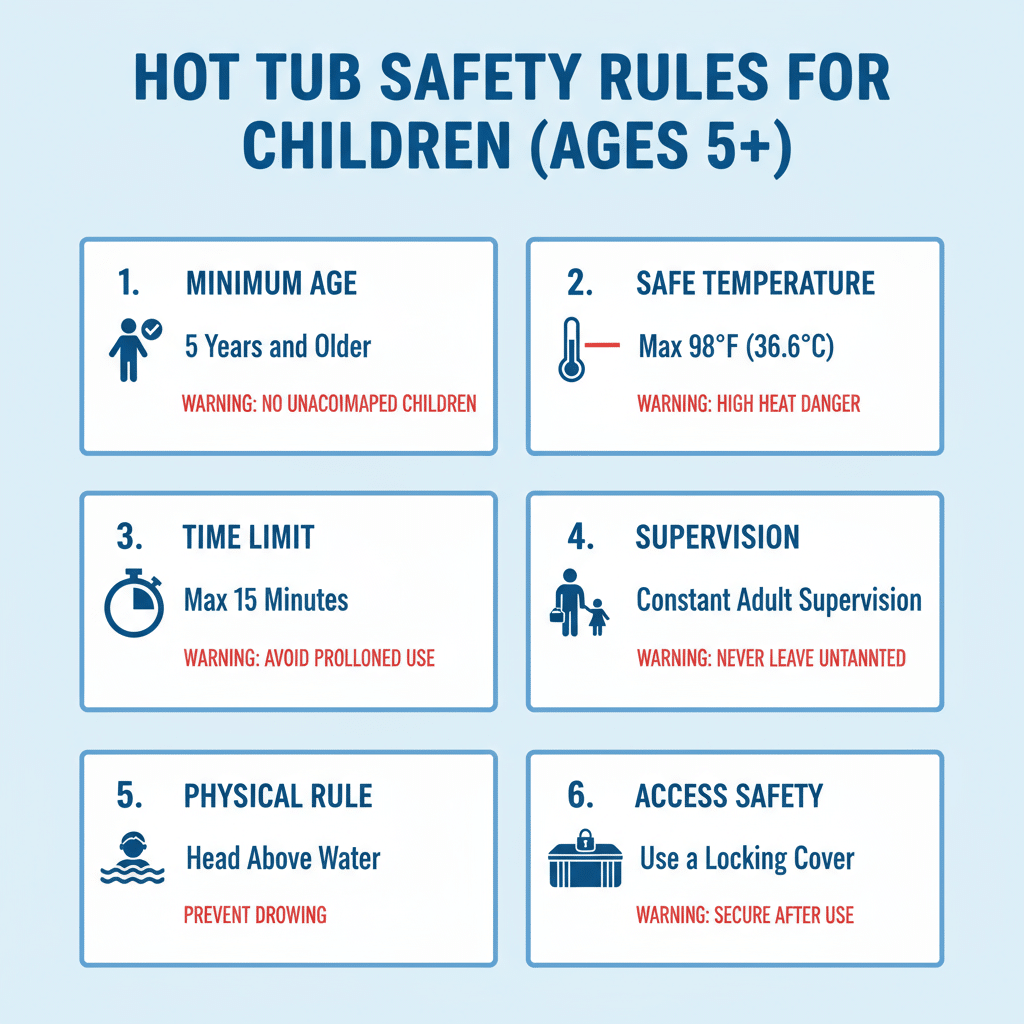

Everything You Need to Know About “Children’s Hot Tub” Safety
In the fast-paced rhythm of modern life, finding quality family time and relaxation is paramount. While hot tubs are a popular way for adults to de-stress and soothe muscles, their introduction into the family environment raises a crucial question: Can children go in hot tubs? This query necessitates a comprehensive safety and health evaluation centered around the “children’s hot tub” keyword.
This article synthesizes competitor content and guidelines from authoritative bodies like the Centers for Disease Control and Prevention (CDC), the American Academy of Pediatrics (AAP), and the Pool and Hot Tub Alliance (PHTA) to provide parents with an original, comprehensive, and scientifically grounded guide on hot tub safety for children.
Table of Contents
1. Can Children Go in Hot Tubs? Scientific Data and Age Limits
The answer to Can children go in hot tubs? depends on the child’s age and the precautions taken. Experts advise considering strict age limits and physiological differences before allowing hot tub use.
Why Is It Risky for Children Under 5?
A child’s physiology differs significantly from an adult’s, making them more vulnerable to the high temperatures found in a hot tub environment. The CDC strongly advises that children under the age of 5 should steer clear of hot tubs [1]. The primary reasons for this restriction include:
•Thermoregulation (Body Temperature Regulation) Immaturity: Young children have a larger body surface area relative to their volume. This means they absorb heat faster, and their ability to lose heat through sweating is not fully developed. Consequently, the risk of overheating (hyperthermia) is significantly higher than for adults. The thinner skin of infants further exacerbates this risk.
•Hygiene and Chemical Sensitivity: Infants and toddlers may lack full control over their bodily functions, which can rapidly contaminate the hot tub water. Furthermore, their developing immune systems and sensitive skin are more susceptible to hot tub chemicals (chlorine, bromine), which can lead to skin irritations.
In Summary: The recommended minimum age for hot tub use is generally considered to be 5 years and older. For children below this age, hot tubs pose serious health risks.
Here’s another topic that could help you: A hot tub leak can be tricky here’s how to spot and fix it.
2. Key Hot Tub Dangers for Children: From Overheating to Drowning
Parents must be aware of hot tub dangers for children to ensure a safe experience. The risks in a hot tub encompass not only temperature but also physical safety and hygiene.
Thermal Risk: Overheating and Dehydration
The standard hot tub temperature of 40°C (104°F) is excessively hot for a child. High temperatures can quickly elevate a child’s core body temperature, leading to heat stroke and potential loss of consciousness. Loss of consciousness directly increases the risk of drowning.
Moreover, hot water increases sweating, causing rapid dehydration. Children lose fluids faster than adults. Symptoms such as nausea, dizziness, or excessive sleepiness are clear signs that the child is overheating and must exit the hot tub immediately.
Something else you might find interesting: Explore how an automatic spa controller keeps water chemistry balanced.
The Greatest Danger: Drowning and Suction Drain Entrapment
According to data from the U.S. Consumer Product Safety Commission (CPSC), the vast majority of fatal drowning incidents in hot tubs and pools (77% in 2023) involve children younger than 5 years old. This underscores that drowning is a greater and more immediate threat than heat.
Another critical hazard is the hot tub’s water suction drain. The powerful suction can trap a child’s hair, swimsuit strings, or a part of their body, leading to drowning. To mitigate this risk:
- •Children must be strictly prohibited from submerging their heads underwater.
- •Newer hot tubs are equipped with dual drain outlets to disperse the suction force. Parents should ensure their hot tubs comply with current safety standards.
- •The location of the cut-off switch to immediately stop the pump in an emergency must be known.
Chemical Sensitivity and Skin Health
Improperly balanced pH and disinfectant levels in hot tub water can lead to skin infections in children, such as Folliculitis (inflammation of the hair follicles), commonly known as “hot tub rash”. Furthermore, high levels of chlorine or other chemicals can cause chemical irritation on sensitive skin.
Crucial Rule: If your child exhibits symptoms of diarrhea or any illness, they must not enter the hot tub to prevent water contamination and the spread of infection.
For more insights, check out: This article explains what is a swim spa offers compared to traditional pools.
3. Safe Hot Tub Use Rules for Children
For children over the age of 5, a hot tub can be a safe and enjoyable activity when the correct precautions are in place. The following are essential rules for hot tub safety for children.
Safe Temperature and Time Restrictions
The water temperature must be lowered for children to use the hot tub safely.
| Safety Criterion | Expert Recommendation (PHTA/CDC) | Purpose of Risk Reduction |
| Minimum Age | 5 years and older | Prevents overheating and hygiene risks. |
| Safe Temperature | 35°C – 36.6°C (95°F – 98°F) | Prevents heat stroke and loss of consciousness. |
| Maximum Duration | 10 – 15 minutes | Prevents dehydration and overheating. The strictest advice is 5 minutes at 98°F. |
| Physical Rule | Head must be completely out of the water when standing | Prevents drowning and water ingestion. |
| Supervision | Constant Adult Supervision, within arm’s reach | Eliminates the risk of drowning and accidents. |
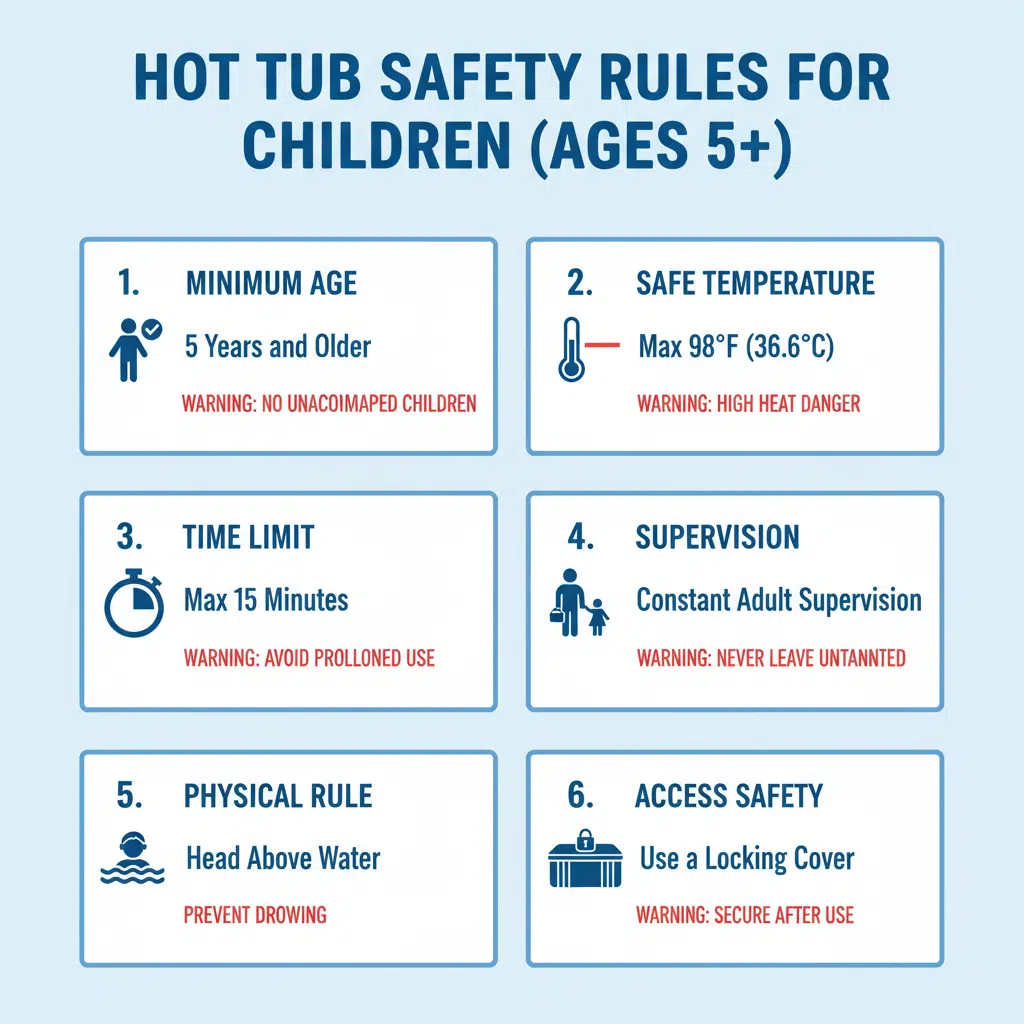
Constant Supervision and Physical Requirements
Constant adult supervision is mandatory during hot tub use. The supervising adult must remain focused and within “arm’s reach” of the child.
Additionally, when the child stands in the hot tub, their head must remain completely above the water. If the child is not tall enough, jump seats/booster seats or the shallower sections of the hot tub should be used to keep the water level at or below the waist. Avoiding full immersion helps to reduce the risk of overheating.
Here’s another topic that could help you: Our guide to massage therapy includes tips on choosing the right spa bed.
Hydration and Monitoring Body Response
Since hot water causes rapid fluid loss, children should be given plenty of water or juice before and immediately after using the hot tub. They should also be encouraged to keep water nearby while soaking. Children must be taught to exit the hot tub immediately if they feel unwell (dizziness, nausea).
4. Advanced Safety Measures and Checklist for Parents
Safety must be maintained not only during use but also when the hot tub is unattended.
Hot Tub Access and Lock Mechanisms
To minimize the risk of drowning, access to the hot tub must be completely blocked when not in use. This highlights the importance of hot tub child lock mechanisms:
1.Locking Safety Cover: The hot tub must be covered with a lockable safety cover that meets the ASTM F1346 standard. These covers prevent children from accessing the tub on their own.
2.Fencing and Barriers: If possible, the hot tub area should be surrounded by a fence or barrier, similar to pools, to restrict access by young children.
For more insights, check out: Wondering about average hot tub temp settings? We’ve got the numbers.
Chemical Maintenance and Testing
Parents should regularly test the hot tub water. Using test strips to ensure the water’s pH level (ideally between 7.4 and 7.6) and disinfectant level (chlorine or bromine) are within the safe range prevents skin irritations and waterborne illnesses.
Safety in Vacation and Public Areas
Hygiene and temperature control can be more challenging in commercial hot tubs at hotels or resorts. The following advice is for traveling parents:
- •Visual Inspection: Check if the water is cloudy, foamy, or has an overpowering chemical odor. Counterintuitively, a strong chlorine smell can indicate that the chlorine is depleted and the water is dirty.
- •Temperature Check: If possible, bring a thermometer to verify the water temperature. Commercial hot tubs are often set to the adult standard of 104°F.
5. Benefits and Alternatives of Hot Tubs for Children
When all safety measures are adhered to, hot tubs can offer valuable benefits for families.
Quality Family Time and Relaxation
Hot tubs provide a screen-free environment where children and parents can communicate and bond. The warm water can help alleviate minor muscle tension and contribute to a child’s relaxation.
Swim Spa Alternative
For families with younger children or those seeking longer water activities, Swim Spas offer an excellent alternative. Swim spas are larger than hot tubs and are typically maintained at lower temperatures (pool temperature). This allows children to swim and play safely for extended periods.
Summary and Conclusion
The relationship between hot tub and children requires risk management and conscious parenting. With the right precautions, hot tubs can be a safe and enjoyable family activity for children over 5 years old.
| Safety Criterion | Recommended Rule | Purpose of Risk Reduction |
| Age Limit | 5 years and older | Prevents overheating and hygiene risks. |
| Temperature | Maximum 36.6°C (98°F) | Prevents heat stroke and loss of consciousness. |
| Duration | Maximum 15 minutes | Prevents dehydration and overheating. |
| Supervision | Constant, within arm’s reach of an adult | Eliminates the risk of drowning and accidents. |
| Physical Rule | Head must be completely out of the water when standing | Prevents drowning and water ingestion. |
| Access Safety | Locking cover (Hot Tub Child Lock) | Prevents accidental drowning when unattended. |
It must be remembered that the most critical safety tool in a hot tub is responsible and constant adult supervision. By adhering to these rules, you can transform your hot tub into a safe and peaceful retreat for the entire family.
[…] may also be interested in this: Safety tips for using a childrens hot tub are essential for family-friendly spa […]
[…] This guide explores the ideal temperature settings for a children hot tub. […]