
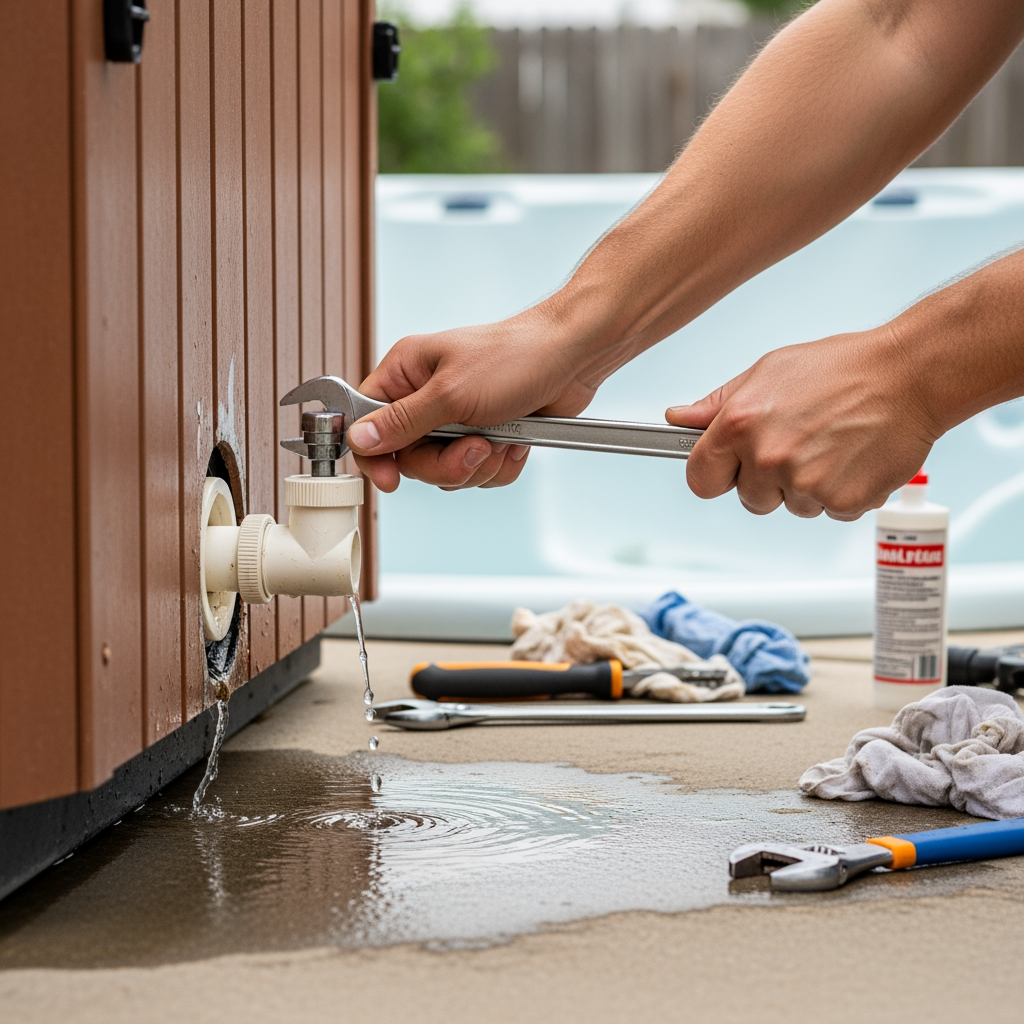
HomeHot TubHot Tub Leak Repair! Finding, Fixing, Preventing Water Loss

Hot Tub Leak Repair! Finding, Fixing, Preventing Water Loss

Author

Date

Category

I. Introduction: The Unwelcome Drip in Your Backyard Oasis

The hot tub is a sanctuary-a place for relaxation, hydrotherapy, and unwinding after a long day. However, few things disrupt this tranquility faster than discovering a hot tub leaking. This issue, often starting as a subtle drop in the water level, can quickly escalate into a stressful and costly problem if not addressed promptly. For many homeowners, the sight of water pooling around the base of their spa or the realization that they are constantly refilling the tub signals the beginning of a frustrating repair process.

This comprehensive guide is designed to empower every hot tub owner in the United States to become a master of hot tub leak repair. We will move beyond simple guesswork, providing a detailed, step-by-step methodology for hot tub leak detection, diagnosing the root cause, executing effective repairs, and understanding when to call a professional. By the time you finish this article, you will have the knowledge to confidently fix a leak hot tub and return your spa to its intended purpose: pure, worry-free enjoyment.

Before diving into the mechanics of fixing hot tub leaks, it is essential to distinguish between normal water loss and a genuine problem. A certain degree of water loss is inevitable due to evaporation, especially in heated, aerated water. However, if you find yourself frequently adding significant amounts of water, it is highly likely that you are dealing with a true hot tub leak.

II. Pinpointing the Problem: How to Find a Leak in a Hot Tub

The most challenging part of any leaking hot tub repair is often not the fix itself, but accurately locating the source. Without a precise diagnosis, any attempt to repair hot tub leak will be a costly shot in the dark. This section focuses on a systematic approach to hot tub leak detection, helping you narrow down the possibilities.

A. The Evaporation vs. Leak Test (The Bucket Test)

The first step in any investigation is determining if the water loss is abnormal. The Bucket Test is the definitive method for distinguishing between natural evaporation and a structural hot tub leak.

  1. Preparation: Place a large bucket on the first or second step of your hot tub. Fill the bucket with water so the level inside the bucket matches the water level in the spa.
  2. Stabilization: Turn off all jets, air blowers, and pumps. Mark the water level inside the bucket and the water level inside the spa with a piece of tape or a permanent marker.
  3. Observation: Wait 24 hours. The water loss in the hot tub should be roughly equal to the water loss in the bucket.
  4. Analysis: If the spa’s water level has dropped significantly more than the bucket’s water level (typically more than 1/8 to 1/4 inch difference), you have confirmed a genuine hot tub leak. If the levels are nearly identical, the loss is likely just evaporation, and you are simply experiencing the effects of a hot, aerated environment.

You may also be interested in this: Safety tips for using a childrens hot tub are essential for family-friendly spa time.

B. Visual Inspection: Where to Look First

Once a leak is confirmed, a thorough visual inspection is mandatory. This is the simplest and often the most effective form of hot tub leak detection.

  • Exterior Examination: Walk around the entire perimeter of the spa. Look for wet spots, puddles, or damp ground, especially if the hot tub leaking from bottom is suspected. Water often follows the path of least resistance, so the wet spot may not be directly below the leak source.
  • Equipment Bay Check: Turn off the power at the breaker before opening the equipment access panel. Use a powerful flashlight to inspect the pump, heater, control pack, and plumbing connections. Look for drips, mineral deposits (calcium or rust), or standing water. A hot tub pump leaking will often leave a telltale trail of water or corrosion around the motor housing or seals.

C. The Water Level Drop Test

If the visual inspection fails to reveal the source, the water level drop test is the next logical step to finding a leak in a hot tub.

  1. Power Down: Turn off the power to the spa completely.
  2. Mark and Wait: Mark the current water level. Allow the water to drop naturally until it stops.
  3. Analyze the Resting Point: The point at which the water stops dropping is critical. The leak is almost certainly located in the components or shell features that are just above this new, lower water level.
    • If the water stops dropping at the level of the jets, the leak is likely in a jet seal or manifold.
    • If the water stops dropping at the level of the light fixture, the leak is likely around the light housing.
    • If the water continues to drop to the bottom of the tub, the leak is either in the main drain (rare) or, more commonly, in the plumbing lines that are always below the water level.

D. Advanced Detection Techniques

For hard-to-find leaks, particularly those that only occur when the pump is running, more advanced techniques are necessary.

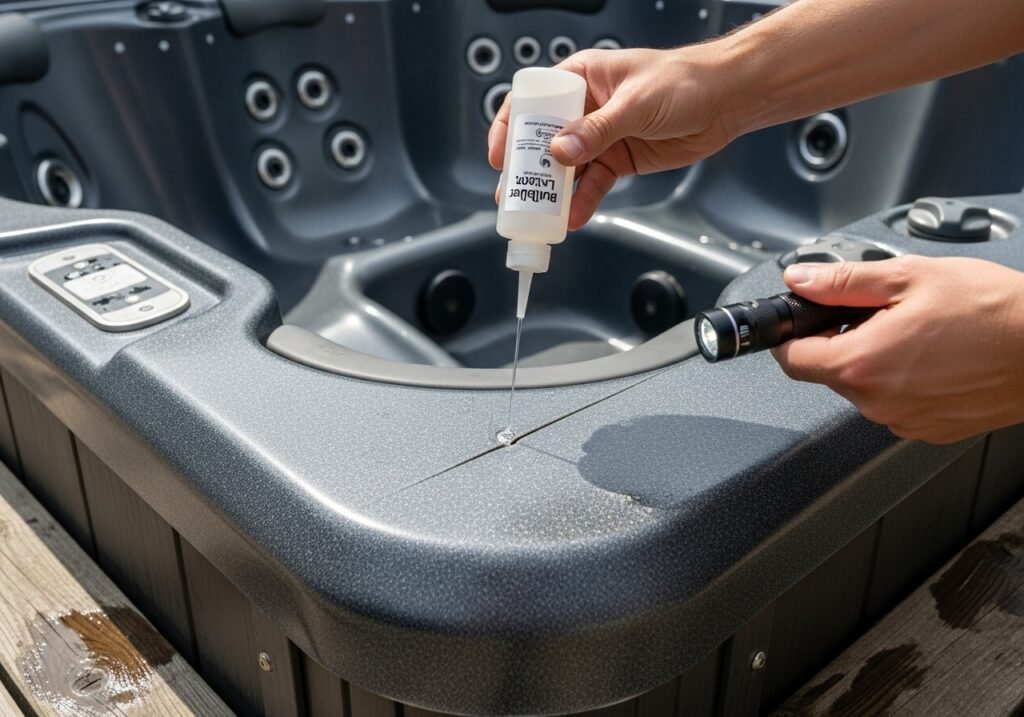
  • The Dye Test: This method is highly effective for pinpointing leaks around static components like jets, fittings, and lights. With the pump off, or running on a low setting, use a syringe to gently introduce a few drops of leak detection dye (or food coloring) near a suspected leak area. If a leak exists, the dye will be sucked into the crack or opening, visually confirming the source.
  • Pressure Testing: This is typically a professional-level technique but is the most reliable way to confirm a leak in the plumbing lines. A technician isolates individual plumbing lines and pressurizes them to see which one loses pressure, thus identifying the faulty line.

The challenge of finding a leak in a hot tub is compounded in spas with full-foam insulation. This foam hides the plumbing and equipment, forcing you to cut away the wet, saturated foam to find the source. This is a messy, time-consuming process, but often the only way to access the leak and successfully execute a leaking hot tub repair.
hot tub leaking repair

III. Common Leak Sources and Detailed Repair Solutions

Once you have successfully completed hot tub leak detection, the next phase is the actual hot tub leak repair. The repair method depends entirely on the component that is failing.

For more insights, check out: An automatic spa system can simplify your maintenance routine significantly.

A. Equipment Leaks: Pumps, Heaters, and O-Rings

The equipment bay houses the most common sources of leaks due to the constant pressure and heat they endure.

Hot Tub Pump Leaking and Seals

A hot tub pump leaking is a frequent issue, often manifesting as water dripping from the motor side of the pump. This is almost always caused by a failure of the mechanical seals.

  • Diagnosis: Look for water dripping from the weep hole underneath the pump motor. If you see this, the hot tub seals leaking are the culprit.
  • Repair: This is a mechanical repair that requires disassembling the pump’s “wet end” (the part that handles the water) and replacing the two-piece mechanical seal kit.
  • Safety First: Turn off the power and close the gate valves on both sides of the pump to prevent the spa from draining.
  • Replacement: The old seal must be carefully removed and the new seal installed, ensuring the ceramic and spring-loaded pieces are correctly seated. While a DIY job, many opt for a professional for this repair due to the precision required.

Heater and Plumbing Unions

The heater assembly is another high-pressure point. Leaks here are usually not from the heating element itself, but from the plumbing unions connecting the heater to the rest of the system.

  • Diagnosis: Look for drips or mineral deposits at the large plastic nuts (unions) on either end of the heater tube.
  • Repair: Most union leaks are fixed by simply tightening the union nut by hand. Never use tools to tighten plastic unions, as this can crack the plastic. If tightening fails, the rubber O-ring or gasket inside the union nut needs to be replaced. This is a simple and inexpensive hot tub leak repair.

Explore this related topic as well: Not sure what a swim spa is? We break it down in our beginner’s guide.

B. Shell and Plumbing Leaks

These leaks are often the result of physical stress, age, or freeze damage.

Hot Tub Jets Leaking

If the water level drop test pointed to the jets, you are likely dealing with a jet gasket failure. Hot tub jets leaking is a very common scenario, especially in older spas where the gaskets have hardened or deteriorated from chemical exposure.

  • Diagnosis: Use the dye test to confirm the leak is pulling water into the jet body.
  • Repair (Gasket Replacement):
    1.Drain the spa below the level of the leaking jet.
    2.Access the back of the jet from the equipment bay or by removing the access panel.
    3.Unscrew the large plastic nut (locknut) holding the jet body in place.
    4.Carefully push the jet body out from the inside of the spa.
    5.Replace the old gasket with a new one. Apply a small bead of silicone sealant to the gasket for an extra layer of protection before reassembling.
    6.Tighten the locknut only by hand to create a snug, watertight seal.

Pipe and Fitting Leaks

Leaks in the flexible or rigid PVC piping are often the most difficult to access, especially if they are the result of freeze damage, which causes a crack. Fixing hot tub leaks in the plumbing requires cutting and replacing the damaged section.

  • Diagnosis: This usually requires cutting into the foam insulation to expose the pipes. Look for a clean split or crack in the pipe.
  • Repair (Cut and Couple):

1.Drain the spa completely.
2.Use a hacksaw or tubing cutter to remove the cracked section of pipe.
3.Clean the ends of the remaining pipe thoroughly.
4.Use PVC primer and cement to glue a new section of pipe and two couplings to bridge the gap.
5.Allow the cement to cure completely before refilling the spa.

Here’s another topic that could help you: Discover how a spa bed enhances relaxation in compact wellness setups.

Hot Tub Leaking from Bottom (Shell Cracks)

While rare, the acrylic or fiberglass shell can develop cracks, leading to the hot tub leaking from the bottom.

  • Diagnosis: A shell crack is usually visible on the inside surface of the tub.
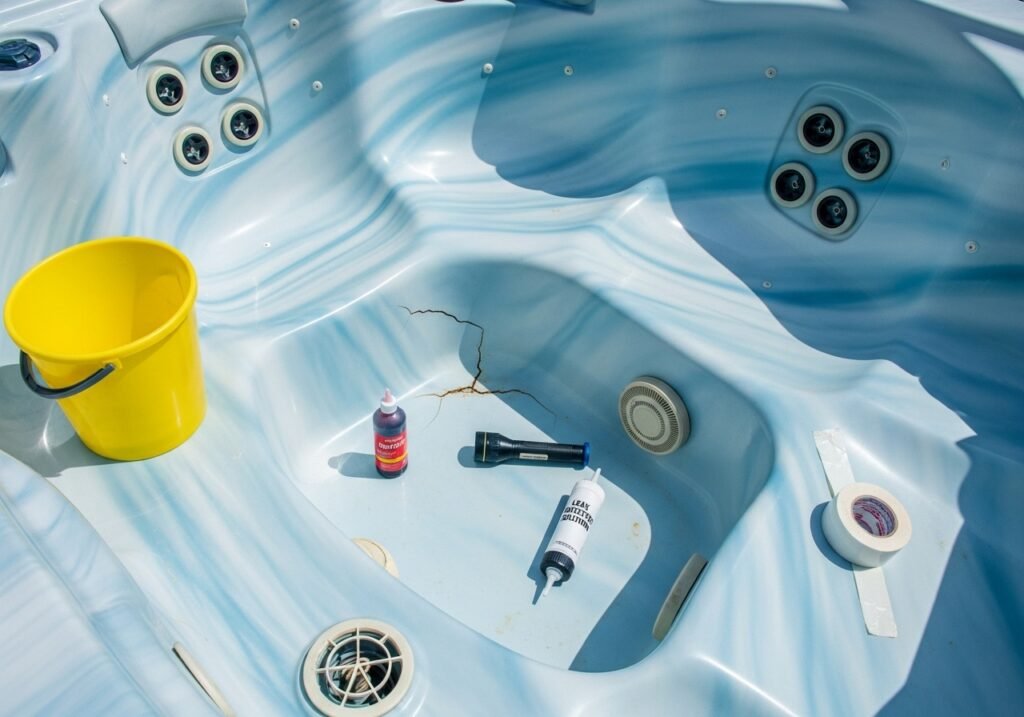
  • Repair: Small surface cracks can often be repaired using a specialized two-part marine-grade epoxy or a hot tub leak repair kit designed for acrylic shells. The area must be completely drained, cleaned, and dried before the product is applied. For large, structural cracks, professional fiberglass or acrylic repair is necessary.
hot tub stop leaking

IV. Quick Fixes and Sealing Products: Hot Tub Stop Leak

For micro-leaks that defy all attempts at visual and dye detection, or for leaks in inaccessible areas, chemical sealants offer a potential solution. These products address the keywords hot tub stop leak and hot tub leak sealer.

You may also be interested in this: The ideal hot tub temperature depends on your comfort and safety needs.

A. Using Liquid Leak Sealers

Products like hot tub stop leak or seal a leak hot tub are specially formulated liquids that circulate in the water and react with air when they encounter a small leak. They then harden to form a temporary or permanent seal.

  • How They Work: The sealant is poured directly into the spa water. The pump is run for a period (usually 12-24 hours) to circulate the product. The sealant is drawn to the leak site, where the change in pressure and exposure to air causes it to solidify.
  • Application Instructions:

1.Remove all filters.
2.Ensure water chemistry is balanced.
3.Pour the recommended amount of hot tub leak sealer into the skimmer or filter area while the pump is running.
4.Run the pump continuously for the specified time.
5.After the treatment, clean the filters thoroughly or replace them, as the sealant can clog them.

  • Crucial Caveat: It is vital to understand the limitations of a hot tub fix a leak chemical. These products are effective only for very small leaks (pinholes or slow drips) in the shell or internal plumbing. They will not work on major cracks, loose unions, or, most importantly, a failed mechanical pump seal. If your hot tub losing water but no leak is visible, a quality sealant is worth a try before resorting to invasive, foam-cutting repairs.

B. Hot Tub Leak Repair Kits

A hot tub leak repair kit typically bundles various products for minor repairs, often including a liquid sealant, a small tube of underwater epoxy, or patches for shell cracks. These kits are excellent for the DIY homeowner tackling small issues.

V.Best-Selling Hot Tub Leak Repair Products on Amazon

One of the most frustrating issues that can interrupt your hot tub relaxation is a leak. Fortunately, Amazon offers a wide range of trusted, top-selling products designed to fix leaks quickly and effectively. In this section, we’ve gathered the best-selling leak repair solutions so you can easily find the right product for your needs. Each item will be listed with its Amazon link and product image for your convenience.
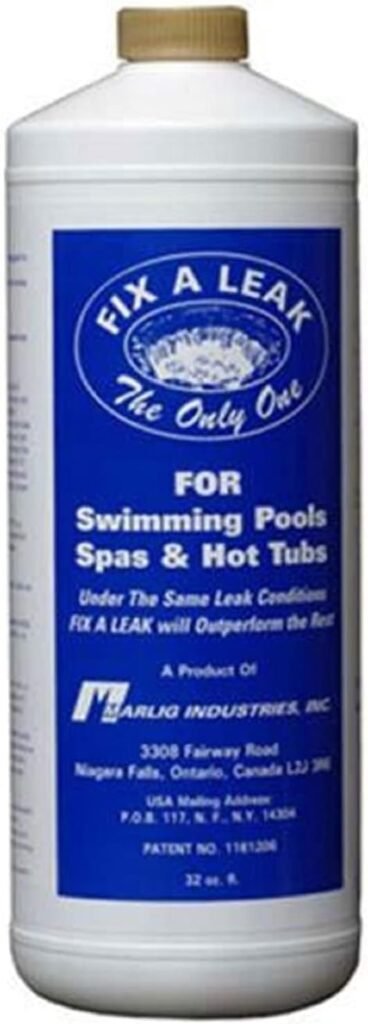
Fix-A-Leak by Marlig for Swimming Pool Spa Hot Tub Leaks 32 oz,White

Marlig Fix-A-Leak Pool and Spa Leak Sealer is a liquid repair solution designed to address small to medium leaks in pools and spas. It works by circulating through the water system and sealing leak points during normal operation. According to customer feedback, it can be effective in certain cases, but may not provide a permanent fix for larger or structural issues. Its main advantage is being an affordable and practical option to try before calling a professional repair service.

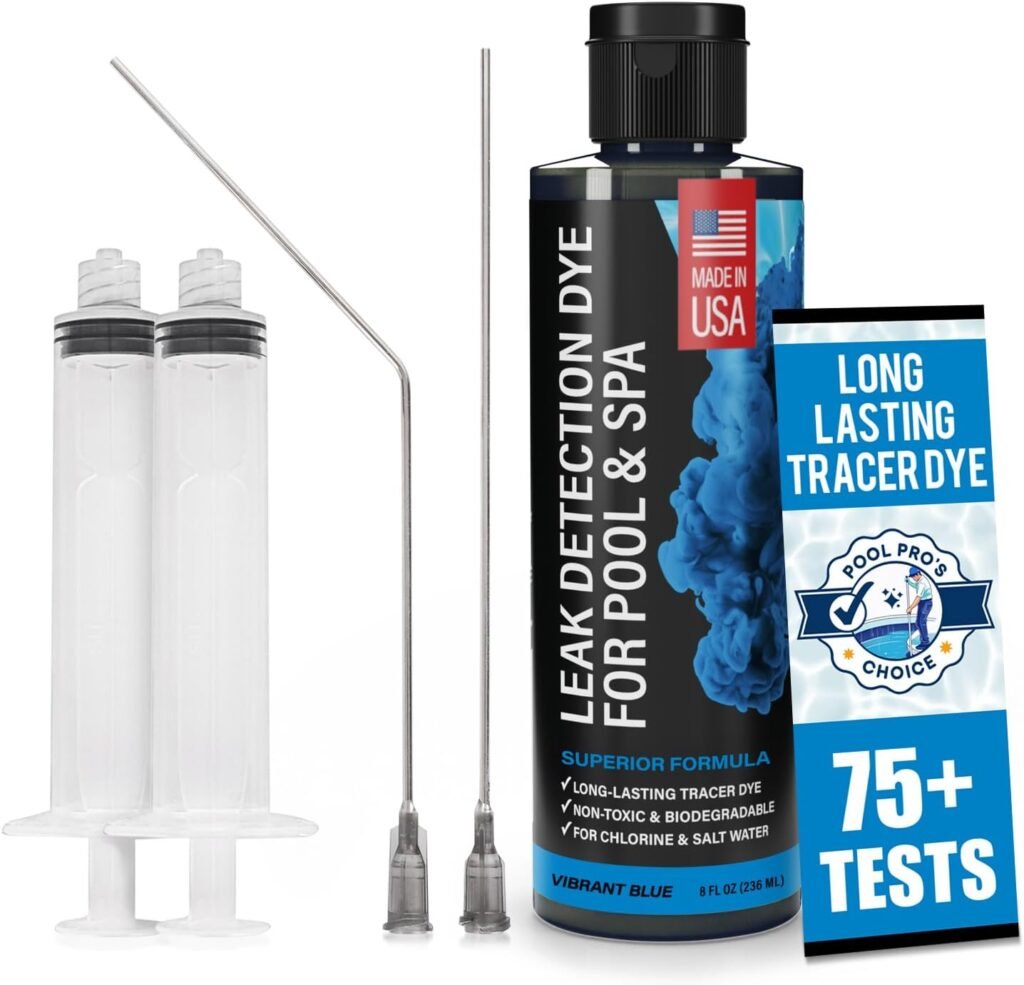
Pool Leak Detection Dye Kit – with 2 Precision Applicators – Made in USA – Superior Long Lasting UV Pool Dye Easily Locates Leaks – for All Pool, Spa, & Hot Tub Types – 8 OZ (Vibrant Blue)

The Pool Leak Detection Dye Kit is a practical tool designed to help identify leaks in pools and spas. It works by releasing dye into the water, allowing you to visually trace the flow and pinpoint the exact location of a leak. This kit is particularly effective for spotting small leaks without the need for professional equipment. According to customer feedback, it’s valued for its simplicity and quick results. However, it’s important to note that this kit is meant for detection only — it does not repair leaks. For best results, it should be used alongside leak repair products.
VI. The Cost of Repair: DIY vs. Professional Service

The question of hot tub leak repair cost is often the deciding factor in how a homeowner chooses to proceed. Costs vary widely based on the leak’s location, the required parts, and whether you choose to perform the leaking hot tub repair yourself.

A. DIY Repair Costs

DIY repairs are generally limited to the cost of parts and materials. These are the most budget-friendly options for fixing hot tub leaks.

Typical DIY Expenses: O-rings, gaskets, PVC cement, and a bottle of hot tub leak sealer usually range from $5 to $75. Specialized tools, like a pump seal kit, may cost slightly more but still represent a significant saving over professional labor.

B. Professional Repair Costs

Professional costs are determined by the technician’s hourly rate (labor) and the complexity of accessing the leak. A leak deep within the foam insulation will incur a much higher labor charge than a simple union leak in the equipment bay.

The following table provides a general estimate of the cost to repair hot tub leak in the United States. Please note that these are broad ranges and can vary based on region and spa brand.

Leak SourceDIY Cost EstimateProfessional Repair Cost EstimateComplexity
Loose Union/O-Ring$5 – $20$150 – $350Low
Jet Gasket$10 – $40$200 – $450Medium
Pump Seal$30 – $70$300 – $600Medium-High
Plumbing Pipe (Cut/Replace)$20 – $50$400 – $800+High (especially in foam)

Note: Professional estimates typically include a service call fee (usually $75 – $150) plus hourly labor.

C. When to Call a Professional for Leaking Hot Tub Repair

While the desire to fix a leak hot tub yourself is understandable, there are clear situations where calling a professional is the safer and more economical choice in the long run.

“Enhance your hot tub experience in the garden by exploring flower care and plant decoration tips at Planetsoftheplants.com.”

  • Undetectable Leaks: If your systematic hot tub leak detection efforts fail, and you cannot definitively locate the source, a professional with specialized pressure testing equipment is necessary.
  • Electrical Concerns: Any repair that involves the heater, control pack, or high-voltage wiring should be left to a qualified spa technician or electrician. Safety must always be the priority.
  • Deep Foam Leaks: If the leak is confirmed to be deep within the foam insulation, the labor involved in cutting and patching the foam can be extensive. A professional often has more efficient methods and experience with this invasive type of leaking hot tub repair.
  • Warranty Concerns: If your spa is still under warranty, attempting a DIY repair may void the coverage. Always check your warranty terms before starting any repair.

VII. Prevention: Avoiding Future Hot Tub Leaks

The best hot tub leak repair is the one you never have to do. Proactive maintenance is key to preventing the common causes of leaks.

A. Proper Winterization

In colder climates, freeze damage is one of the leading causes of catastrophic plumbing leaks. Water expands when it freezes, cracking PVC pipes and fittings.

Essential Step: If you plan to shut down your spa for the winter, it must be completely drained and all water must be blown out of the lines, jets, and equipment using a shop vacuum or air compressor. This prevents the freeze-thaw cycle from causing a hot tub leak.

B. Water Chemistry and Component Protection

Improper water chemistry is a silent killer of hot tub components. Highly acidic water (low pH) can corrode internal metal parts, while high sanitizer levels can prematurely harden and degrade rubber gaskets and O-rings, leading to hot tub seals leaking and hot tub jets leaking.

Regular Testing: Test your pH and alkalinity weekly. Maintain a pH between 7.4 and 7.6 and alkalinity between 80 and 120 ppm to protect your equipment.

C. Routine Inspection

Make a habit of performing a quick visual check of the equipment bay every time you change the water (typically every 3–4 months). Look for any signs of moisture, mineral buildup, or loose connections. Catching a small drip early can prevent a major hot tub leak down the line. If you notice the hot tub leaking after refill, it is often a sign that a union was not tightened properly or a gasket was pinched during the process.

VIII. Enjoying Your Leak-Free Spa

A hot tub leak can be a daunting problem, but it is rarely a reason to panic or replace your entire spa. By following the systematic approach outlined in this guide—starting with the Bucket Test, moving to precise hot tub leak detection with visual inspection and dye, and finally executing the appropriate hot tub leak repair—you can successfully address virtually any issue.

Whether you choose a quick fix with a quality hot tub stop leak product for a pinhole or undertake the more involved process of replacing a pump seal or jet gasket, patience and methodical work are your best tools. With the right knowledge and a little effort, you can conquer the drip, restore your water level, and get back to enjoying the soothing, therapeutic benefits of your perfectly maintained, leak-free backyard oasis.

I. Introduction: The Unwelcome Drip in Your Backyard Oasis

The hot tub is a sanctuary-a place for relaxation, hydrotherapy, and unwinding after a long day. However, few things disrupt this tranquility faster than discovering a hot tub leaking. This issue, often starting as a subtle drop in the water level, can quickly escalate into a stressful and costly problem if not addressed promptly. For many homeowners, the sight of water pooling around the base of their spa or the realization that they are constantly refilling the tub signals the beginning of a frustrating repair process.

This comprehensive guide is designed to empower every hot tub owner in the United States to become a master of hot tub leak repair. We will move beyond simple guesswork, providing a detailed, step-by-step methodology for hot tub leak detection, diagnosing the root cause, executing effective repairs, and understanding when to call a professional. By the time you finish this article, you will have the knowledge to confidently fix a leak hot tub and return your spa to its intended purpose: pure, worry-free enjoyment.

Before diving into the mechanics of fixing hot tub leaks, it is essential to distinguish between normal water loss and a genuine problem. A certain degree of water loss is inevitable due to evaporation, especially in heated, aerated water. However, if you find yourself frequently adding significant amounts of water, it is highly likely that you are dealing with a true hot tub leak.

II. Pinpointing the Problem: How to Find a Leak in a Hot Tub

The most challenging part of any leaking hot tub repair is often not the fix itself, but accurately locating the source. Without a precise diagnosis, any attempt to repair hot tub leak will be a costly shot in the dark. This section focuses on a systematic approach to hot tub leak detection, helping you narrow down the possibilities.

A. The Evaporation vs. Leak Test (The Bucket Test)

The first step in any investigation is determining if the water loss is abnormal. The Bucket Test is the definitive method for distinguishing between natural evaporation and a structural hot tub leak.

  1. Preparation: Place a large bucket on the first or second step of your hot tub. Fill the bucket with water so the level inside the bucket matches the water level in the spa.
  2. Stabilization: Turn off all jets, air blowers, and pumps. Mark the water level inside the bucket and the water level inside the spa with a piece of tape or a permanent marker.
  3. Observation: Wait 24 hours. The water loss in the hot tub should be roughly equal to the water loss in the bucket.
  4. Analysis: If the spa’s water level has dropped significantly more than the bucket’s water level (typically more than 1/8 to 1/4 inch difference), you have confirmed a genuine hot tub leak. If the levels are nearly identical, the loss is likely just evaporation, and you are simply experiencing the effects of a hot, aerated environment.

You may also be interested in this: Safety tips for using a childrens hot tub are essential for family-friendly spa time.

B. Visual Inspection: Where to Look First

Once a leak is confirmed, a thorough visual inspection is mandatory. This is the simplest and often the most effective form of hot tub leak detection.

  • Exterior Examination: Walk around the entire perimeter of the spa. Look for wet spots, puddles, or damp ground, especially if the hot tub leaking from bottom is suspected. Water often follows the path of least resistance, so the wet spot may not be directly below the leak source.
  • Equipment Bay Check: Turn off the power at the breaker before opening the equipment access panel. Use a powerful flashlight to inspect the pump, heater, control pack, and plumbing connections. Look for drips, mineral deposits (calcium or rust), or standing water. A hot tub pump leaking will often leave a telltale trail of water or corrosion around the motor housing or seals.

C. The Water Level Drop Test

If the visual inspection fails to reveal the source, the water level drop test is the next logical step to finding a leak in a hot tub.

  1. Power Down: Turn off the power to the spa completely.
  2. Mark and Wait: Mark the current water level. Allow the water to drop naturally until it stops.
  3. Analyze the Resting Point: The point at which the water stops dropping is critical. The leak is almost certainly located in the components or shell features that are just above this new, lower water level.
    • If the water stops dropping at the level of the jets, the leak is likely in a jet seal or manifold.
    • If the water stops dropping at the level of the light fixture, the leak is likely around the light housing.
    • If the water continues to drop to the bottom of the tub, the leak is either in the main drain (rare) or, more commonly, in the plumbing lines that are always below the water level.

D. Advanced Detection Techniques

For hard-to-find leaks, particularly those that only occur when the pump is running, more advanced techniques are necessary.

  • The Dye Test: This method is highly effective for pinpointing leaks around static components like jets, fittings, and lights. With the pump off, or running on a low setting, use a syringe to gently introduce a few drops of leak detection dye (or food coloring) near a suspected leak area. If a leak exists, the dye will be sucked into the crack or opening, visually confirming the source.
  • Pressure Testing: This is typically a professional-level technique but is the most reliable way to confirm a leak in the plumbing lines. A technician isolates individual plumbing lines and pressurizes them to see which one loses pressure, thus identifying the faulty line.

The challenge of finding a leak in a hot tub is compounded in spas with full-foam insulation. This foam hides the plumbing and equipment, forcing you to cut away the wet, saturated foam to find the source. This is a messy, time-consuming process, but often the only way to access the leak and successfully execute a leaking hot tub repair.

hot tub leaking repair

III. Common Leak Sources and Detailed Repair Solutions

Once you have successfully completed hot tub leak detection, the next phase is the actual hot tub leak repair. The repair method depends entirely on the component that is failing.

For more insights, check out: An automatic spa system can simplify your maintenance routine significantly.

A. Equipment Leaks: Pumps, Heaters, and O-Rings

The equipment bay houses the most common sources of leaks due to the constant pressure and heat they endure.

Hot Tub Pump Leaking and Seals

A hot tub pump leaking is a frequent issue, often manifesting as water dripping from the motor side of the pump. This is almost always caused by a failure of the mechanical seals.

  • Diagnosis: Look for water dripping from the weep hole underneath the pump motor. If you see this, the hot tub seals leaking are the culprit.
  • Repair: This is a mechanical repair that requires disassembling the pump’s “wet end” (the part that handles the water) and replacing the two-piece mechanical seal kit.
  • Safety First: Turn off the power and close the gate valves on both sides of the pump to prevent the spa from draining.
  • Replacement: The old seal must be carefully removed and the new seal installed, ensuring the ceramic and spring-loaded pieces are correctly seated. While a DIY job, many opt for a professional for this repair due to the precision required.

Heater and Plumbing Unions

The heater assembly is another high-pressure point. Leaks here are usually not from the heating element itself, but from the plumbing unions connecting the heater to the rest of the system.

  • Diagnosis: Look for drips or mineral deposits at the large plastic nuts (unions) on either end of the heater tube.
  • Repair: Most union leaks are fixed by simply tightening the union nut by hand. Never use tools to tighten plastic unions, as this can crack the plastic. If tightening fails, the rubber O-ring or gasket inside the union nut needs to be replaced. This is a simple and inexpensive hot tub leak repair.

Explore this related topic as well: Not sure what a swim spa is? We break it down in our beginner’s guide.

B. Shell and Plumbing Leaks

These leaks are often the result of physical stress, age, or freeze damage.

Hot Tub Jets Leaking

If the water level drop test pointed to the jets, you are likely dealing with a jet gasket failure. Hot tub jets leaking is a very common scenario, especially in older spas where the gaskets have hardened or deteriorated from chemical exposure.

  • Diagnosis: Use the dye test to confirm the leak is pulling water into the jet body.
  • Repair (Gasket Replacement):
    1.Drain the spa below the level of the leaking jet.
    2.Access the back of the jet from the equipment bay or by removing the access panel.
    3.Unscrew the large plastic nut (locknut) holding the jet body in place.
    4.Carefully push the jet body out from the inside of the spa.
    5.Replace the old gasket with a new one. Apply a small bead of silicone sealant to the gasket for an extra layer of protection before reassembling.
    6.Tighten the locknut only by hand to create a snug, watertight seal.

Pipe and Fitting Leaks

Leaks in the flexible or rigid PVC piping are often the most difficult to access, especially if they are the result of freeze damage, which causes a crack. Fixing hot tub leaks in the plumbing requires cutting and replacing the damaged section.

  • Diagnosis: This usually requires cutting into the foam insulation to expose the pipes. Look for a clean split or crack in the pipe.
  • Repair (Cut and Couple):

1.Drain the spa completely.
2.Use a hacksaw or tubing cutter to remove the cracked section of pipe.
3.Clean the ends of the remaining pipe thoroughly.
4.Use PVC primer and cement to glue a new section of pipe and two couplings to bridge the gap.
5.Allow the cement to cure completely before refilling the spa.

Here’s another topic that could help you: Discover how a spa bed enhances relaxation in compact wellness setups.

Hot Tub Leaking from Bottom (Shell Cracks)

While rare, the acrylic or fiberglass shell can develop cracks, leading to the hot tub leaking from the bottom.

  • Diagnosis: A shell crack is usually visible on the inside surface of the tub.
  • Repair: Small surface cracks can often be repaired using a specialized two-part marine-grade epoxy or a hot tub leak repair kit designed for acrylic shells. The area must be completely drained, cleaned, and dried before the product is applied. For large, structural cracks, professional fiberglass or acrylic repair is necessary.
hot tub stop leaking

IV. Quick Fixes and Sealing Products: Hot Tub Stop Leak

For micro-leaks that defy all attempts at visual and dye detection, or for leaks in inaccessible areas, chemical sealants offer a potential solution. These products address the keywords hot tub stop leak and hot tub leak sealer.

You may also be interested in this: The ideal hot tub temperature depends on your comfort and safety needs.

A. Using Liquid Leak Sealers

Products like hot tub stop leak or seal a leak hot tub are specially formulated liquids that circulate in the water and react with air when they encounter a small leak. They then harden to form a temporary or permanent seal.

  • How They Work: The sealant is poured directly into the spa water. The pump is run for a period (usually 12-24 hours) to circulate the product. The sealant is drawn to the leak site, where the change in pressure and exposure to air causes it to solidify.
  • Application Instructions:

1.Remove all filters.
2.Ensure water chemistry is balanced.
3.Pour the recommended amount of hot tub leak sealer into the skimmer or filter area while the pump is running.
4.Run the pump continuously for the specified time.
5.After the treatment, clean the filters thoroughly or replace them, as the sealant can clog them.

  • Crucial Caveat: It is vital to understand the limitations of a hot tub fix a leak chemical. These products are effective only for very small leaks (pinholes or slow drips) in the shell or internal plumbing. They will not work on major cracks, loose unions, or, most importantly, a failed mechanical pump seal. If your hot tub losing water but no leak is visible, a quality sealant is worth a try before resorting to invasive, foam-cutting repairs.

B. Hot Tub Leak Repair Kits

A hot tub leak repair kit typically bundles various products for minor repairs, often including a liquid sealant, a small tube of underwater epoxy, or patches for shell cracks. These kits are excellent for the DIY homeowner tackling small issues.

V.Best-Selling Hot Tub Leak Repair Products on Amazon

One of the most frustrating issues that can interrupt your hot tub relaxation is a leak. Fortunately, Amazon offers a wide range of trusted, top-selling products designed to fix leaks quickly and effectively. In this section, we’ve gathered the best-selling leak repair solutions so you can easily find the right product for your needs. Each item will be listed with its Amazon link and product image for your convenience.

Fix-A-Leak by Marlig for Swimming Pool Spa Hot Tub Leaks 32 oz,White

Marlig Fix-A-Leak Pool and Spa Leak Sealer is a liquid repair solution designed to address small to medium leaks in pools and spas. It works by circulating through the water system and sealing leak points during normal operation. According to customer feedback, it can be effective in certain cases, but may not provide a permanent fix for larger or structural issues. Its main advantage is being an affordable and practical option to try before calling a professional repair service.

Pool Leak Detection Dye Kit – with 2 Precision Applicators – Made in USA – Superior Long Lasting UV Pool Dye Easily Locates Leaks – for All Pool, Spa, & Hot Tub Types – 8 OZ (Vibrant Blue)

The Pool Leak Detection Dye Kit is a practical tool designed to help identify leaks in pools and spas. It works by releasing dye into the water, allowing you to visually trace the flow and pinpoint the exact location of a leak. This kit is particularly effective for spotting small leaks without the need for professional equipment. According to customer feedback, it’s valued for its simplicity and quick results. However, it’s important to note that this kit is meant for detection only — it does not repair leaks. For best results, it should be used alongside leak repair products.

VI. The Cost of Repair: DIY vs. Professional Service

The question of hot tub leak repair cost is often the deciding factor in how a homeowner chooses to proceed. Costs vary widely based on the leak’s location, the required parts, and whether you choose to perform the leaking hot tub repair yourself.

A. DIY Repair Costs

DIY repairs are generally limited to the cost of parts and materials. These are the most budget-friendly options for fixing hot tub leaks.

Typical DIY Expenses: O-rings, gaskets, PVC cement, and a bottle of hot tub leak sealer usually range from $5 to $75. Specialized tools, like a pump seal kit, may cost slightly more but still represent a significant saving over professional labor.

B. Professional Repair Costs

Professional costs are determined by the technician’s hourly rate (labor) and the complexity of accessing the leak. A leak deep within the foam insulation will incur a much higher labor charge than a simple union leak in the equipment bay.

The following table provides a general estimate of the cost to repair hot tub leak in the United States. Please note that these are broad ranges and can vary based on region and spa brand.

Leak SourceDIY Cost EstimateProfessional Repair Cost EstimateComplexity
Loose Union/O-Ring$5 – $20$150 – $350Low
Jet Gasket$10 – $40$200 – $450Medium
Pump Seal$30 – $70$300 – $600Medium-High
Plumbing Pipe (Cut/Replace)$20 – $50$400 – $800+High (especially in foam)

Note: Professional estimates typically include a service call fee (usually $75 – $150) plus hourly labor.

C. When to Call a Professional for Leaking Hot Tub Repair

While the desire to fix a leak hot tub yourself is understandable, there are clear situations where calling a professional is the safer and more economical choice in the long run.

“Enhance your hot tub experience in the garden by exploring flower care and plant decoration tips at Planetsoftheplants.com.”

  • Undetectable Leaks: If your systematic hot tub leak detection efforts fail, and you cannot definitively locate the source, a professional with specialized pressure testing equipment is necessary.
  • Electrical Concerns: Any repair that involves the heater, control pack, or high-voltage wiring should be left to a qualified spa technician or electrician. Safety must always be the priority.
  • Deep Foam Leaks: If the leak is confirmed to be deep within the foam insulation, the labor involved in cutting and patching the foam can be extensive. A professional often has more efficient methods and experience with this invasive type of leaking hot tub repair.
  • Warranty Concerns: If your spa is still under warranty, attempting a DIY repair may void the coverage. Always check your warranty terms before starting any repair.

VII. Prevention: Avoiding Future Hot Tub Leaks

The best hot tub leak repair is the one you never have to do. Proactive maintenance is key to preventing the common causes of leaks.

A. Proper Winterization

In colder climates, freeze damage is one of the leading causes of catastrophic plumbing leaks. Water expands when it freezes, cracking PVC pipes and fittings.

Essential Step: If you plan to shut down your spa for the winter, it must be completely drained and all water must be blown out of the lines, jets, and equipment using a shop vacuum or air compressor. This prevents the freeze-thaw cycle from causing a hot tub leak.

B. Water Chemistry and Component Protection

Improper water chemistry is a silent killer of hot tub components. Highly acidic water (low pH) can corrode internal metal parts, while high sanitizer levels can prematurely harden and degrade rubber gaskets and O-rings, leading to hot tub seals leaking and hot tub jets leaking.

Regular Testing: Test your pH and alkalinity weekly. Maintain a pH between 7.4 and 7.6 and alkalinity between 80 and 120 ppm to protect your equipment.

C. Routine Inspection

Make a habit of performing a quick visual check of the equipment bay every time you change the water (typically every 3–4 months). Look for any signs of moisture, mineral buildup, or loose connections. Catching a small drip early can prevent a major hot tub leak down the line. If you notice the hot tub leaking after refill, it is often a sign that a union was not tightened properly or a gasket was pinched during the process.

VIII. Enjoying Your Leak-Free Spa

A hot tub leak can be a daunting problem, but it is rarely a reason to panic or replace your entire spa. By following the systematic approach outlined in this guide—starting with the Bucket Test, moving to precise hot tub leak detection with visual inspection and dye, and finally executing the appropriate hot tub leak repair—you can successfully address virtually any issue.

Whether you choose a quick fix with a quality hot tub stop leak product for a pinhole or undertake the more involved process of replacing a pump seal or jet gasket, patience and methodical work are your best tools. With the right knowledge and a little effort, you can conquer the drip, restore your water level, and get back to enjoying the soothing, therapeutic benefits of your perfectly maintained, leak-free backyard oasis.

I. Introduction: The Unwelcome Drip in Your Backyard Oasis

The hot tub is a sanctuary-a place for relaxation, hydrotherapy, and unwinding after a long day. However, few things disrupt this tranquility faster than discovering a hot tub leaking. This issue, often starting as a subtle drop in the water level, can quickly escalate into a stressful and costly problem if not addressed promptly. For many homeowners, the sight of water pooling around the base of their spa or the realization that they are constantly refilling the tub signals the beginning of a frustrating repair process.

This comprehensive guide is designed to empower every hot tub owner in the United States to become a master of hot tub leak repair. We will move beyond simple guesswork, providing a detailed, step-by-step methodology for hot tub leak detection, diagnosing the root cause, executing effective repairs, and understanding when to call a professional. By the time you finish this article, you will have the knowledge to confidently fix a leak hot tub and return your spa to its intended purpose: pure, worry-free enjoyment.

Before diving into the mechanics of fixing hot tub leaks, it is essential to distinguish between normal water loss and a genuine problem. A certain degree of water loss is inevitable due to evaporation, especially in heated, aerated water. However, if you find yourself frequently adding significant amounts of water, it is highly likely that you are dealing with a true hot tub leak.

II. Pinpointing the Problem: How to Find a Leak in a Hot Tub

The most challenging part of any leaking hot tub repair is often not the fix itself, but accurately locating the source. Without a precise diagnosis, any attempt to repair hot tub leak will be a costly shot in the dark. This section focuses on a systematic approach to hot tub leak detection, helping you narrow down the possibilities.

A. The Evaporation vs. Leak Test (The Bucket Test)

The first step in any investigation is determining if the water loss is abnormal. The Bucket Test is the definitive method for distinguishing between natural evaporation and a structural hot tub leak.

  1. Preparation: Place a large bucket on the first or second step of your hot tub. Fill the bucket with water so the level inside the bucket matches the water level in the spa.
  2. Stabilization: Turn off all jets, air blowers, and pumps. Mark the water level inside the bucket and the water level inside the spa with a piece of tape or a permanent marker.
  3. Observation: Wait 24 hours. The water loss in the hot tub should be roughly equal to the water loss in the bucket.
  4. Analysis: If the spa’s water level has dropped significantly more than the bucket’s water level (typically more than 1/8 to 1/4 inch difference), you have confirmed a genuine hot tub leak. If the levels are nearly identical, the loss is likely just evaporation, and you are simply experiencing the effects of a hot, aerated environment.

You may also be interested in this: Safety tips for using a childrens hot tub are essential for family-friendly spa time.

B. Visual Inspection: Where to Look First

Once a leak is confirmed, a thorough visual inspection is mandatory. This is the simplest and often the most effective form of hot tub leak detection.

  • Exterior Examination: Walk around the entire perimeter of the spa. Look for wet spots, puddles, or damp ground, especially if the hot tub leaking from bottom is suspected. Water often follows the path of least resistance, so the wet spot may not be directly below the leak source.
  • Equipment Bay Check: Turn off the power at the breaker before opening the equipment access panel. Use a powerful flashlight to inspect the pump, heater, control pack, and plumbing connections. Look for drips, mineral deposits (calcium or rust), or standing water. A hot tub pump leaking will often leave a telltale trail of water or corrosion around the motor housing or seals.

C. The Water Level Drop Test

If the visual inspection fails to reveal the source, the water level drop test is the next logical step to finding a leak in a hot tub.

  1. Power Down: Turn off the power to the spa completely.
  2. Mark and Wait: Mark the current water level. Allow the water to drop naturally until it stops.
  3. Analyze the Resting Point: The point at which the water stops dropping is critical. The leak is almost certainly located in the components or shell features that are just above this new, lower water level.
    • If the water stops dropping at the level of the jets, the leak is likely in a jet seal or manifold.
    • If the water stops dropping at the level of the light fixture, the leak is likely around the light housing.
    • If the water continues to drop to the bottom of the tub, the leak is either in the main drain (rare) or, more commonly, in the plumbing lines that are always below the water level.

D. Advanced Detection Techniques

For hard-to-find leaks, particularly those that only occur when the pump is running, more advanced techniques are necessary.

  • The Dye Test: This method is highly effective for pinpointing leaks around static components like jets, fittings, and lights. With the pump off, or running on a low setting, use a syringe to gently introduce a few drops of leak detection dye (or food coloring) near a suspected leak area. If a leak exists, the dye will be sucked into the crack or opening, visually confirming the source.
  • Pressure Testing: This is typically a professional-level technique but is the most reliable way to confirm a leak in the plumbing lines. A technician isolates individual plumbing lines and pressurizes them to see which one loses pressure, thus identifying the faulty line.

The challenge of finding a leak in a hot tub is compounded in spas with full-foam insulation. This foam hides the plumbing and equipment, forcing you to cut away the wet, saturated foam to find the source. This is a messy, time-consuming process, but often the only way to access the leak and successfully execute a leaking hot tub repair.

hot tub leaking repair

III. Common Leak Sources and Detailed Repair Solutions

Once you have successfully completed hot tub leak detection, the next phase is the actual hot tub leak repair. The repair method depends entirely on the component that is failing.

For more insights, check out: An automatic spa system can simplify your maintenance routine significantly.

A. Equipment Leaks: Pumps, Heaters, and O-Rings

The equipment bay houses the most common sources of leaks due to the constant pressure and heat they endure.

Hot Tub Pump Leaking and Seals

A hot tub pump leaking is a frequent issue, often manifesting as water dripping from the motor side of the pump. This is almost always caused by a failure of the mechanical seals.

  • Diagnosis: Look for water dripping from the weep hole underneath the pump motor. If you see this, the hot tub seals leaking are the culprit.
  • Repair: This is a mechanical repair that requires disassembling the pump’s “wet end” (the part that handles the water) and replacing the two-piece mechanical seal kit.
  • Safety First: Turn off the power and close the gate valves on both sides of the pump to prevent the spa from draining.
  • Replacement: The old seal must be carefully removed and the new seal installed, ensuring the ceramic and spring-loaded pieces are correctly seated. While a DIY job, many opt for a professional for this repair due to the precision required.

Heater and Plumbing Unions

The heater assembly is another high-pressure point. Leaks here are usually not from the heating element itself, but from the plumbing unions connecting the heater to the rest of the system.

  • Diagnosis: Look for drips or mineral deposits at the large plastic nuts (unions) on either end of the heater tube.
  • Repair: Most union leaks are fixed by simply tightening the union nut by hand. Never use tools to tighten plastic unions, as this can crack the plastic. If tightening fails, the rubber O-ring or gasket inside the union nut needs to be replaced. This is a simple and inexpensive hot tub leak repair.

Explore this related topic as well: Not sure what a swim spa is? We break it down in our beginner’s guide.

B. Shell and Plumbing Leaks

These leaks are often the result of physical stress, age, or freeze damage.

Hot Tub Jets Leaking

If the water level drop test pointed to the jets, you are likely dealing with a jet gasket failure. Hot tub jets leaking is a very common scenario, especially in older spas where the gaskets have hardened or deteriorated from chemical exposure.

  • Diagnosis: Use the dye test to confirm the leak is pulling water into the jet body.
  • Repair (Gasket Replacement):
    1.Drain the spa below the level of the leaking jet.
    2.Access the back of the jet from the equipment bay or by removing the access panel.
    3.Unscrew the large plastic nut (locknut) holding the jet body in place.
    4.Carefully push the jet body out from the inside of the spa.
    5.Replace the old gasket with a new one. Apply a small bead of silicone sealant to the gasket for an extra layer of protection before reassembling.
    6.Tighten the locknut only by hand to create a snug, watertight seal.

Pipe and Fitting Leaks

Leaks in the flexible or rigid PVC piping are often the most difficult to access, especially if they are the result of freeze damage, which causes a crack. Fixing hot tub leaks in the plumbing requires cutting and replacing the damaged section.

  • Diagnosis: This usually requires cutting into the foam insulation to expose the pipes. Look for a clean split or crack in the pipe.
  • Repair (Cut and Couple):

1.Drain the spa completely.
2.Use a hacksaw or tubing cutter to remove the cracked section of pipe.
3.Clean the ends of the remaining pipe thoroughly.
4.Use PVC primer and cement to glue a new section of pipe and two couplings to bridge the gap.
5.Allow the cement to cure completely before refilling the spa.

Here’s another topic that could help you: Discover how a spa bed enhances relaxation in compact wellness setups.

Hot Tub Leaking from Bottom (Shell Cracks)

While rare, the acrylic or fiberglass shell can develop cracks, leading to the hot tub leaking from the bottom.

  • Diagnosis: A shell crack is usually visible on the inside surface of the tub.
  • Repair: Small surface cracks can often be repaired using a specialized two-part marine-grade epoxy or a hot tub leak repair kit designed for acrylic shells. The area must be completely drained, cleaned, and dried before the product is applied. For large, structural cracks, professional fiberglass or acrylic repair is necessary.
hot tub stop leaking

IV. Quick Fixes and Sealing Products: Hot Tub Stop Leak

For micro-leaks that defy all attempts at visual and dye detection, or for leaks in inaccessible areas, chemical sealants offer a potential solution. These products address the keywords hot tub stop leak and hot tub leak sealer.

You may also be interested in this: The ideal hot tub temperature depends on your comfort and safety needs.

A. Using Liquid Leak Sealers

Products like hot tub stop leak or seal a leak hot tub are specially formulated liquids that circulate in the water and react with air when they encounter a small leak. They then harden to form a temporary or permanent seal.

  • How They Work: The sealant is poured directly into the spa water. The pump is run for a period (usually 12-24 hours) to circulate the product. The sealant is drawn to the leak site, where the change in pressure and exposure to air causes it to solidify.
  • Application Instructions:

1.Remove all filters.
2.Ensure water chemistry is balanced.
3.Pour the recommended amount of hot tub leak sealer into the skimmer or filter area while the pump is running.
4.Run the pump continuously for the specified time.
5.After the treatment, clean the filters thoroughly or replace them, as the sealant can clog them.

  • Crucial Caveat: It is vital to understand the limitations of a hot tub fix a leak chemical. These products are effective only for very small leaks (pinholes or slow drips) in the shell or internal plumbing. They will not work on major cracks, loose unions, or, most importantly, a failed mechanical pump seal. If your hot tub losing water but no leak is visible, a quality sealant is worth a try before resorting to invasive, foam-cutting repairs.

B. Hot Tub Leak Repair Kits

A hot tub leak repair kit typically bundles various products for minor repairs, often including a liquid sealant, a small tube of underwater epoxy, or patches for shell cracks. These kits are excellent for the DIY homeowner tackling small issues.

V.Best-Selling Hot Tub Leak Repair Products on Amazon

One of the most frustrating issues that can interrupt your hot tub relaxation is a leak. Fortunately, Amazon offers a wide range of trusted, top-selling products designed to fix leaks quickly and effectively. In this section, we’ve gathered the best-selling leak repair solutions so you can easily find the right product for your needs. Each item will be listed with its Amazon link and product image for your convenience.

Fix-A-Leak by Marlig for Swimming Pool Spa Hot Tub Leaks 32 oz,White

Marlig Fix-A-Leak Pool and Spa Leak Sealer is a liquid repair solution designed to address small to medium leaks in pools and spas. It works by circulating through the water system and sealing leak points during normal operation. According to customer feedback, it can be effective in certain cases, but may not provide a permanent fix for larger or structural issues. Its main advantage is being an affordable and practical option to try before calling a professional repair service.

Pool Leak Detection Dye Kit – with 2 Precision Applicators – Made in USA – Superior Long Lasting UV Pool Dye Easily Locates Leaks – for All Pool, Spa, & Hot Tub Types – 8 OZ (Vibrant Blue)

The Pool Leak Detection Dye Kit is a practical tool designed to help identify leaks in pools and spas. It works by releasing dye into the water, allowing you to visually trace the flow and pinpoint the exact location of a leak. This kit is particularly effective for spotting small leaks without the need for professional equipment. According to customer feedback, it’s valued for its simplicity and quick results. However, it’s important to note that this kit is meant for detection only — it does not repair leaks. For best results, it should be used alongside leak repair products.

VI. The Cost of Repair: DIY vs. Professional Service

The question of hot tub leak repair cost is often the deciding factor in how a homeowner chooses to proceed. Costs vary widely based on the leak’s location, the required parts, and whether you choose to perform the leaking hot tub repair yourself.

A. DIY Repair Costs

DIY repairs are generally limited to the cost of parts and materials. These are the most budget-friendly options for fixing hot tub leaks.

Typical DIY Expenses: O-rings, gaskets, PVC cement, and a bottle of hot tub leak sealer usually range from $5 to $75. Specialized tools, like a pump seal kit, may cost slightly more but still represent a significant saving over professional labor.

B. Professional Repair Costs

Professional costs are determined by the technician’s hourly rate (labor) and the complexity of accessing the leak. A leak deep within the foam insulation will incur a much higher labor charge than a simple union leak in the equipment bay.

The following table provides a general estimate of the cost to repair hot tub leak in the United States. Please note that these are broad ranges and can vary based on region and spa brand.

Leak SourceDIY Cost EstimateProfessional Repair Cost EstimateComplexity
Loose Union/O-Ring$5 – $20$150 – $350Low
Jet Gasket$10 – $40$200 – $450Medium
Pump Seal$30 – $70$300 – $600Medium-High
Plumbing Pipe (Cut/Replace)$20 – $50$400 – $800+High (especially in foam)

Note: Professional estimates typically include a service call fee (usually $75 – $150) plus hourly labor.

C. When to Call a Professional for Leaking Hot Tub Repair

While the desire to fix a leak hot tub yourself is understandable, there are clear situations where calling a professional is the safer and more economical choice in the long run.

“Enhance your hot tub experience in the garden by exploring flower care and plant decoration tips at Planetsoftheplants.com.”

  • Undetectable Leaks: If your systematic hot tub leak detection efforts fail, and you cannot definitively locate the source, a professional with specialized pressure testing equipment is necessary.
  • Electrical Concerns: Any repair that involves the heater, control pack, or high-voltage wiring should be left to a qualified spa technician or electrician. Safety must always be the priority.
  • Deep Foam Leaks: If the leak is confirmed to be deep within the foam insulation, the labor involved in cutting and patching the foam can be extensive. A professional often has more efficient methods and experience with this invasive type of leaking hot tub repair.
  • Warranty Concerns: If your spa is still under warranty, attempting a DIY repair may void the coverage. Always check your warranty terms before starting any repair.

VII. Prevention: Avoiding Future Hot Tub Leaks

The best hot tub leak repair is the one you never have to do. Proactive maintenance is key to preventing the common causes of leaks.

A. Proper Winterization

In colder climates, freeze damage is one of the leading causes of catastrophic plumbing leaks. Water expands when it freezes, cracking PVC pipes and fittings.

Essential Step: If you plan to shut down your spa for the winter, it must be completely drained and all water must be blown out of the lines, jets, and equipment using a shop vacuum or air compressor. This prevents the freeze-thaw cycle from causing a hot tub leak.

B. Water Chemistry and Component Protection

Improper water chemistry is a silent killer of hot tub components. Highly acidic water (low pH) can corrode internal metal parts, while high sanitizer levels can prematurely harden and degrade rubber gaskets and O-rings, leading to hot tub seals leaking and hot tub jets leaking.

Regular Testing: Test your pH and alkalinity weekly. Maintain a pH between 7.4 and 7.6 and alkalinity between 80 and 120 ppm to protect your equipment.

C. Routine Inspection

Make a habit of performing a quick visual check of the equipment bay every time you change the water (typically every 3–4 months). Look for any signs of moisture, mineral buildup, or loose connections. Catching a small drip early can prevent a major hot tub leak down the line. If you notice the hot tub leaking after refill, it is often a sign that a union was not tightened properly or a gasket was pinched during the process.

VIII. Enjoying Your Leak-Free Spa

A hot tub leak can be a daunting problem, but it is rarely a reason to panic or replace your entire spa. By following the systematic approach outlined in this guide—starting with the Bucket Test, moving to precise hot tub leak detection with visual inspection and dye, and finally executing the appropriate hot tub leak repair—you can successfully address virtually any issue.

Whether you choose a quick fix with a quality hot tub stop leak product for a pinhole or undertake the more involved process of replacing a pump seal or jet gasket, patience and methodical work are your best tools. With the right knowledge and a little effort, you can conquer the drip, restore your water level, and get back to enjoying the soothing, therapeutic benefits of your perfectly maintained, leak-free backyard oasis.

4 COMMENTS

Comments are closed.

Hot Tub & Spa Help

At Hot Tub Spa Help, our goal is to be your trusted guide in the world of hot tubs and spas. We aim to provide you with the most accurate and practical information on everything you're curious about regarding these specialty products. On our site, you will find comprehensive articles that reflect expert opinions and our own industry experience—from maintenance tips and troubleshooting to choosing the best equipment and understanding water chemistry. We are proud to offer all of this valuable content completely free of charge, making it easier for everyone to access the knowledge they need.Our primary motivation is seeing our readers benefit from our resource and enjoy a trouble-free hot tub experience. Our mission is to create an unbiased resource free from sales pressure, one that prioritizes user experience and safety above all else. Thank you for being a part of this community; we are glad to have you here.

Recent posts

Recent comments